Energy Efficiency

Commercial HVAC Coil Cleaning in Ontario

Dirty coils force your HVAC system to work harder, which raises energy costs and shortens equipment life. You might be wondering if a thin grease layer matters—it does, because it blocks heat transfer. Coil cleaning removes that buildup so your system runs as designed.

All Coil Types
Quick Service
Free Quotes
500+
Happy Clients
30+
Years Experience
24/7
Emergency Service

The Hidden Cost of Dirty Coils

HVAC coils move heat between refrigerant and air. When coils get dirty, heat transfer drops. That causes longer run times, higher energy use, and unstable temperatures.

Commercial kitchens dirty coils fast because grease vapor and airborne particles stick to fins. Power Hoods provides coil cleaning for commercial HVAC and refrigeration equipment. We match cleaning methods to the coil type, so fins stay intact while contamination leaves. The effect is simple: better airflow, lower energy costs, and longer equipment life.

Coils We Clean

  • Rooftop unit condenser coils
  • Air handler evaporator coils
  • Make-up air unit coils
  • Walk-in cooler evaporator coils
  • Walk-in freezer coils
  • Reach-in refrigerator and freezer coils
  • Ice machine condenser coils
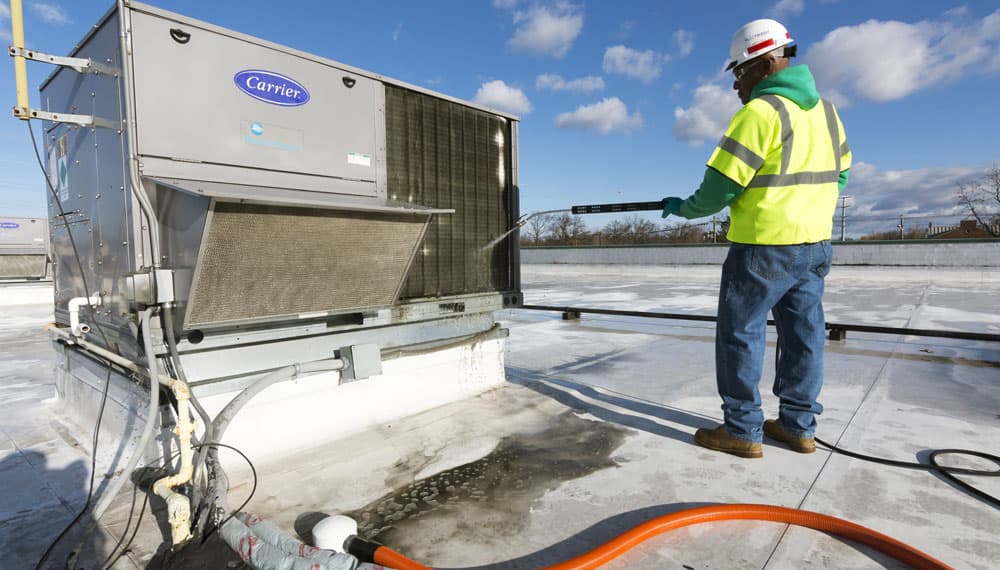
Before and after comparison of cleaned commercial HVAC coils
Benefits

Why Coil Cleaning Pays for Itself

Clean coils use less energy, last longer, and hold stable temperatures. The ROI is easy to measure.

Significant Energy Savings

Dirty coils reduce efficiency by 20-30%. That forces the compressor to run longer cycles. Coil cleaning restores heat transfer, and many customers see 15-25% lower HVAC energy costs.

  • 15-25% typical energy savings
  • Faster cooling cycles

Extended Equipment Life

Dirty coils strain compressors. The system runs hotter and works harder, which leads to failure. Clean coils reduce load and can extend equipment life by 5-10 years.

  • Reduced compressor strain
  • Fewer emergency breakdowns

Better Temperature Control

Dirty coils can’t maintain designed temperatures. Walk-ins run warm and AC struggles. Clean coils restore full cooling capacity, which protects food safety.

  • Consistent temperatures
  • Food safety compliance

Improved Air Quality

Dirty evaporator coils can hold mold, bacteria, and allergens. When the system runs, air passes over that buildup. Coil cleaning removes it, which improves indoor air quality.

  • Remove mold and bacteria
  • Reduce musty odors
Our Process

Our Coil Cleaning Process

We clean thoroughly while protecting delicate coil fins.
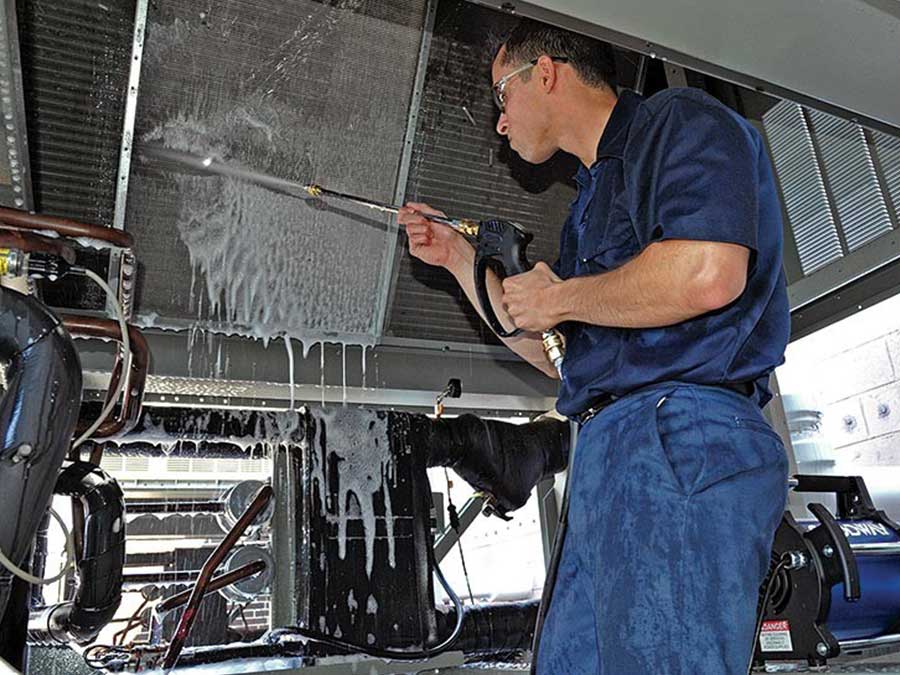
Our cleaning process

5

Step Process

01

Equipment Assessment

We inspect coils to determine contamination level, check for damage, and select the appropriate cleaning method for each coil type.

02

System Preparation

We protect adjacent components, ensure proper drainage, and prepare the work area. For evaporator coils, we coordinate with refrigeration cycles.

03

Chemical Treatment

Specialized coil cleaners break down grease, biological growth, and debris. We select alkaline, acidic, or neutral cleaners based on coil material and soil type.

04

Careful Cleaning

Low-pressure washing removes contamination without damaging fins. We clean both coil faces and flush contamination completely through.

05

Fin Restoration

Bent or crushed fins restrict airflow. We straighten damaged fins using appropriate tools—restoring designed airflow through the coil.

FAQ

Frequently Asked Questions

Commercial kitchens require more frequent coil cleaning than typical offices. We recommend annual cleaning for most kitchen HVAC and quarterly service for rooftop units in heavy grease areas. Walk-in and refrigeration coils should be cleaned every 3-6 months depending on location and exposure.
Individual coil cleaning typically runs $150-$400 depending on size, access, and condition. Complete HVAC system coil cleaning ranges from $400-$1,000. Walk-in coil cleaning runs $100-$250 per unit. We provide itemized quotes for your equipment.
Studies show dirty coils reduce efficiency by 20-30%. After professional coil cleaning, many facilities see 15-25% lower HVAC cooling costs. For a typical restaurant spending $1,500/month on cooling, that’s $225-$375 in monthly savings.
Yes—dirty coils are a leading cause of premature compressor failure. When coils can’t transfer heat, the compressor works harder and runs hotter. That leads to overheating, tripped breakers, and eventual burnout. A $300 coil cleaning can prevent a $3,000-$10,000 replacement.
Condenser coils release heat, so they sit outside on rooftop units and collect airborne debris. Evaporator coils absorb heat, so they sit inside air handlers or walk-ins and collect grease, dust, and biological growth. Both need regular cleaning, but the contamination differs.
Yes. Walk-in evaporator coil cleaning supports food safety and energy efficiency. We clean the evaporator coil, fan blades, and drain pan. For freezers, we coordinate with defrost cycles to access coils safely. Regular cleaning prevents ice buildup and maintains proper temperatures.
Often, yes. Dirty evaporator coils are a common cause of warm walk-ins. When coils can’t transfer heat, the unit runs constantly but can’t reach the target temperature. Coil cleaning often resolves this without expensive repairs.
Not when done correctly. We use low-pressure techniques and the right chemicals for each coil type. High-pressure washers or harsh chemicals can damage fins and coatings. Our technicians use proper coil cleaning methods that restore efficiency without damage.
Individual coils take 30-60 minutes depending on size and condition. Complete HVAC system cleaning typically takes 2-3 hours. Walk-in coil cleaning runs 30-45 minutes per unit. We can often clean multiple units in a single visit for efficiency.
We don’t recommend it. High-pressure water bends fins and pushes debris deeper into coils. Garden hoses don’t remove grease. Commercial coils in kitchen environments need professional coil cleaning with the right chemicals and techniques to restore efficiency.
Yes. Ice machine condenser coils are critical for ice production. Dirty coils reduce output and raise energy use. We clean condenser coils as part of ice machine maintenance, often combined with bin cleaning and sanitization.
Indirectly, yes. When condenser coils are dirty, the ice machine works harder and produces ice more slowly. That can lead to warmer freezing and cloudy ice that melts faster. Clean coils support proper ice machine operation and better ice quality.

Service Areas

Serving the Greater Toronto Area and Ontario

Paying Too Much for Cooling?

Dirty coils cost you money every month. Get a free quote for coil cleaning.