
Scarborough's restaurant kitchens are not average commercial kitchens, and treating them like they are is where compliance failures and fire incidents begin. The concentrated presence of South Asian, Chinese, and Caribbean operators running tandoor ovens, high-output woks, and heavy-duty fryers places most Scarborough kitchens in the highest grease-loading categories defined by NFPA 96. That classification carries direct consequences for how often your exhaust system must be cleaned, inspected, and documented.
If you have searched for hood cleaning services near me and found yourself uncertain about what level of service your kitchen actually requires, this analysis is written for you. Understanding why your equipment type drives your cleaning schedule, what a compliant cleaning actually involves for high-intensity cooking environments, and what non-compliance costs in real operational terms is not optional knowledge for a Scarborough operator. It is the foundation of running a kitchen that passes inspection, maintains its insurance standing, and does not become a fire statistic.
The sections below move from cooking profile to code requirements to practical scheduling, giving you the framework to make an informed decision about your hood maintenance program.
Scarborough's Cooking Profile Is Not the Industry Average
Scarborough's commercial kitchen landscape is unlike any other district in the Greater Toronto Area. South Asian, Chinese, and Caribbean operators form the dominant restaurant profile here, and the equipment they cook on, tandoor ovens, high-BTU wok ranges, and commercial fryer banks, sits squarely in the highest-frequency cleaning tiers under NFPA 96. These are not sandwich counters and burger grills. The compliance obligations are categorically different.
Tandoor ovens operate at extreme sustained heat, generating a plume intensity exceeding virtually every other commercial cooking appliance and saturating exhaust ductwork with carbonized grease at a rate quarterly cleaning can barely keep pace with. Standard exhaust systems were not engineered for this load as a default assumption.
Wok cooking adds a separate problem. High-volume stir-fry cycles aerosolize grease in concentrated bursts throughout every service period. Wok ranges coat duct walls in rapid, repeated cycles, and the accumulation is faster with a different grease character than what you find above a flatgrill or convection oven. That distinction matters when a technician is on-site making decisions about dwell time and pressure. For a detailed look at why grease buildup creates fire risk and what Ontario law requires, see Commercial Kitchen Fire Safety: What Ontario Operators Must Know.
Extended service hours compound both issues. Many Scarborough operators run lunch, dinner, and late-night sittings. When daily operating hours approach or exceed the 16-hour threshold, NFPA 96 triggers a mandatory shift from quarterly to monthly cleaning. That threshold catches more Scarborough kitchens than operators typically expect. The 9 Things Ontario Restaurant Owners Must Know About Hood Cleaning outlines the full schedule framework, including where split-service operations often land.
Choosing a provider without direct experience in these formats is a genuine compliance risk. A service provider calibrated to lower-intensity kitchens will not bring the right chemistry, pressure, or process to a tandoor or wok exhaust system. The cleaning may look complete without actually being compliant.
How NFPA 96 Assigns Cleaning Frequency to Your Equipment
NFPA 96 Table 11.4 sets the cleaning schedule for every commercial kitchen in Canada, and the standard gives operators no discretion on the tier assignment. Cooking type, production volume, and daily operating hours determine the interval; cost convenience and operator preference are not factors.
The four tiers are monthly, quarterly, semi-annually, and annually. For most full-service restaurants in Scarborough's South Asian and Chinese segments, the relevant tier is quarterly at minimum. High-volume operations using charbroiling, wok cooking, or heavy commercial fryer banks fall into this category under the standard's classification criteria. Four cleanings per year is the floor, not the target.
The 16-hour threshold is a hard regulatory trigger. Any kitchen operating more than 16 hours daily moves up to mandatory monthly cleaning under NFPA 96. The 2025 revision to the standard closed a previous gap by explicitly placing 24/7 kitchens into the monthly category; operations that had been operating on quarterly schedules under the prior version no longer qualify for that interval if they run continuously.
NFPA 96 Section 11.6.1 adds a condition-based override that supersedes every scheduled interval. If an inspection reveals grease deposits anywhere in the exhaust system, the entire system must be cleaned before the next cooking period begins, regardless of when the last scheduled service occurred. For operators running high-intensity equipment, this override can effectively compress the interval well below the calendar schedule. Relevant background on how Ontario operators should approach this compliance layer is covered in this guide to commercial exhaust cleaning and NFPA 96 compliance in Ontario.
Fire services authorities enforce NFPA 96 requirements; a failed inspection can result in orders to halt cooking operations. Beyond the operational disruption, non-compliance at the time of a fire incident may jeopardise fire-related coverage in a commercial property insurance policy, operators should confirm the maintenance requirements in their specific policy.
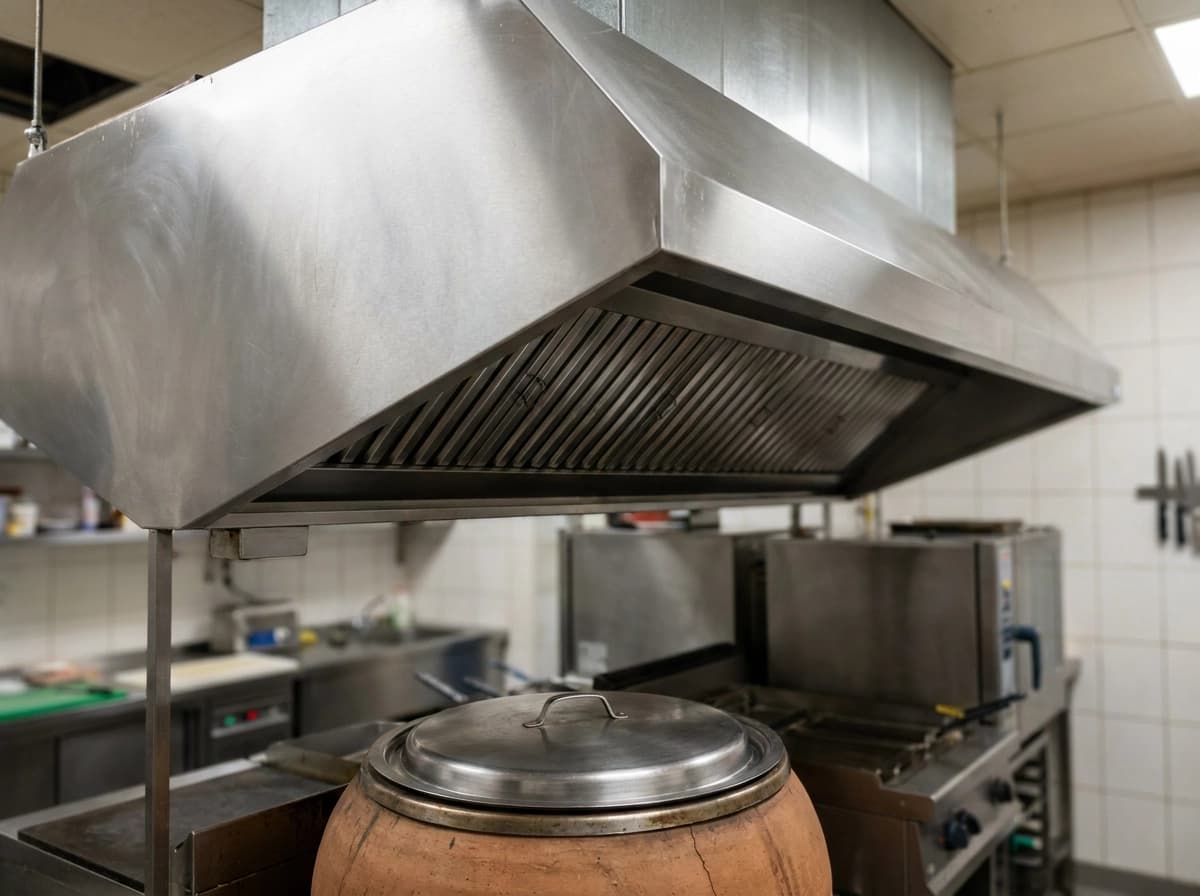
Type I Hoods and Why Wok and Tandoor Kitchens Need Specialist Cleaning
Any commercial cooking equipment that generates grease-laden vapour, fryers, woks, ranges, broilers, char-broilers, tandoors, and salamanders, must be served by a Type I hood, which combines grease capture with an integrated fire suppression system. Type II hoods, which handle heat and moisture only, are not compliant for these categories.
Why Wok and Tandoor Systems Demand More From the Exhaust System
A hood must pull air fast enough to capture the thermal plume before it escapes into the kitchen. The industry-standard capture velocity target is 75 to 150 feet per minute (FPM) at the hood face plane. Wok and tandoor cooking drives plume buoyancy toward the top of that range consistently, which is why NFPA 96 Table 6.1 assigns 300 to 400-plus CFM per linear foot to these high-duty categories, compared to roughly 100 CFM for light-duty applications.
That higher airflow volume has a direct operational consequence: more grease-laden air moving through the system per hour means faster grease accumulation on baffle filters, plenum surfaces, and duct walls. A cleaning interval calibrated for a light-duty sandwich counter is not transferable to a wok or tandoor exhaust system.
The Carbonized Grease Problem
Tandoor ovens produce temperatures far exceeding those of standard commercial equipment, generating carbonized grease deposits that are harder and more adhesive than the liquid or semi-liquid grease typical of fryer and griddle exhaust. Standard degreaser formulations and dwell times do not remove carbonized deposits reliably. Specialist cleaning requires higher-pH alkaline chemistry and extended contact time. Understanding what hood cleaning services actually include for Ontario operators makes clear that compliant cleaning goes well beyond what a general commercial kitchen cleaning service can deliver.
A technician without hands-on experience in wok and tandoor kitchens will not recognize the difference between a carbonized tandoor deposit and standard fryer grease. That gap in recognition is often what separates a compliant clean from an inspection failure.
What Non-Compliance Actually Costs a Scarborough Restaurant Operator
The technical stakes covered above translate directly into financial and legal exposure most operators underestimate until they are sitting in front of an inspector.
Fire services authorities have clear authority to issue an immediate order to cease cooking operations when an inspection finds grease accumulation exceeding NFPA 96 thresholds. For a high-volume South Asian or Chinese kitchen running two to three sittings daily, a single forced closure day means thousands of dollars in lost revenue, plus the premium cost of expedited commercial kitchen exhaust cleaning to get the order lifted. That combination routinely exceeds the annual cost of a properly scheduled maintenance programme.
The insurance exposure is equally serious. Many commercial property and liability policies carry maintenance clauses that can affect fire-related coverage if the exhaust system was not kept to the applicable standard at the time of an incident, operators should review their policy terms directly. An operator without documented quarterly cleaning records for a wok kitchen is not just non-compliant; they are potentially facing an uninsured fire loss. This is not a hypothetical: grease buildup is a leading contributing factor in restaurant fires, and Ontario kitchens are not exempt from that risk. Grease-coated duct walls create a continuous fuel load that, once ignited, can outpace suppression systems and travel from the cooking surface to the roofline.
As detailed in the NFPA 96 framework above, this condition-based override means a wok or tandoor kitchen can become technically non-compliant within weeks of a scheduled clean.
Scheduling cleaning commercial kitchen hoods at the minimum calendar interval, without accounting for actual accumulation rates, is a strategy calibrated for average kitchens. Scarborough's cooking environments are not average.
What a Specialist Commercial Kitchen Hood Cleaning Actually Involves
Understanding what separates a specialist clean from a standard service visit is where compliance risk either gets resolved or compounds.
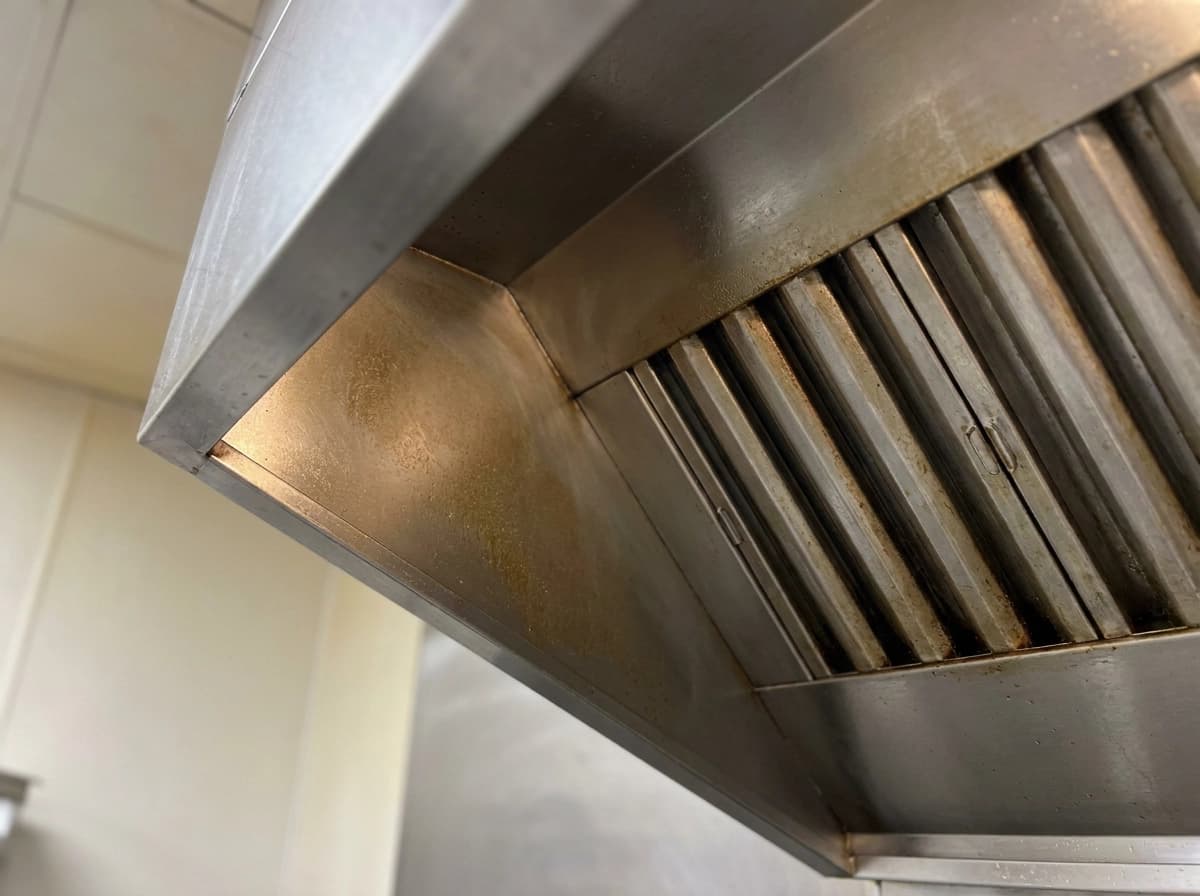
A qualified commercial kitchen hood cleaning begins before any chemical is applied. Technicians inspect and document grease accumulation at every point in the exhaust pathway: baffle filters, plenum chamber, ductwork, and rooftop exhaust fan. That baseline record identifies any Section 11.6.1 condition-based triggers and establishes what the system actually needs, not what a standard protocol assumes.
Tandoor-adjacent systems require different chemistry entirely. As noted above, carbonized tandoor deposits require specialist alkaline chemistry, standard fryer-grade degreaser will not produce a compliant result. For a deeper look at how Ontario operators should approach these requirements, Kitchen Hood Cleaning: What Ontario Operators Must Know sets out the full compliance framework.
Wok exhaust cleaning demands mechanical work first. The plenum and the initial ductwork above the wok range accumulate grease rapidly, driven by the concentrated vapour output of repeated stir-fry cycles. That zone requires manual scraping and wire brush work before chemical degreasing can be effective. Chemical application alone does not remove compacted grease from this area.
Every compliant kitchen exhaust cleaning service must close with before-and-after photographic documentation and a signed service report benchmarked against NFPA 96 thresholds. That report is your primary evidence in an insurance claim or a fire services inspection.
Power Hoods Systems has delivered commercial kitchen hood cleaning to Scarborough's South Asian and Chinese restaurant operators for over 30 years, across more than 5,000 completed projects. Overnight scheduling means high-volume kitchens clean between service periods without losing a shift.
Determining the Right Cleaning Schedule for Your Scarborough Kitchen
Knowing the right process matters less if you are running the wrong schedule. Start with an honest assessment of your equipment type and daily operating hours against NFPA 96 Table 11.4. Tandoor, wok, and commercial fryer operations default to quarterly cleaning at minimum. If your kitchen runs more than 16 hours daily, that threshold triggers monthly cleaning, no exceptions.
That schedule must reflect current conditions. Operators who have added wok stations, introduced a tandoor, or extended service hours since their last schedule was set need to reassess immediately. The NFPA 96 tier is determined by what your kitchen is doing now, not what it was doing when the last service contract was signed.
Use Section 11.6.1 as a practical operational signal, not just a regulatory footnote. If a technician arrives for a scheduled clean and consistently finds heavy grease accumulation, your interval is too long for your actual cooking volume. The correct response is to shorten the interval proactively, before an inspector makes that decision for you.
A generic calendar schedule built on average kitchen assumptions will not accurately reflect the grease load a high-volume wok or tandoor kitchen produces. Requesting a site assessment from a provider who meets the standards that define professional hood cleaning services gives you a frequency recommendation grounded in your specific equipment, cooking intensity, and operating hours rather than industry averages.
Scheduling is also a practical constraint. High-volume Scarborough kitchens cannot absorb cleaning windows during service hours. Power Hoods Systems provides 24/7 emergency service and flexible overnight scheduling specifically to work around that limitation. Operators searching for hood cleaning services near me should treat scheduling flexibility as a non-negotiable selection criterion, not a convenience.
Compliance Is Not a Calendar Exercise in a High-Volume Kitchen
A cleaning schedule is only as useful as the cooking profile it was built for. Your kitchen's placement in NFPA 96's most demanding tiers, established in the sections above, means a generic industry-average schedule is not a compliant option.
The correct response is a schedule grounded in your actual equipment, operating hours, and grease accumulation rate, delivered by technicians who understand the specific chemistry and thermal characteristics of South Asian and Chinese commercial kitchens. That distinction matters at inspection time, and it matters in a fire loss claim.
It is also worth noting that no cleaning method replaces a qualified professional service. Homemade cleaning solutions have a place in commercial kitchens, but that place is smaller than most operators think, they do not constitute a compliant clean under NFPA 96, and relying on them between scheduled services creates undocumented gaps in your compliance record.
Document every clean with a signed service report. That report identifies system condition against NFPA 96 thresholds before and after the work. It is your primary evidence in a fire services inspection and your first line of defence if a fire-related insurance claim is disputed.
Power Hoods Systems has served this exact operator profile in Scarborough since 1993. Contact us to schedule a site assessment and receive a cleaning frequency recommendation built around your kitchen's actual conditions, not a generic calendar.
Conclusion
Scarborough's South Asian and Chinese kitchens generate grease loads that standard cleaning schedules were never designed to handle. Quarterly service is not overcaution; it is the baseline that your equipment, operating hours, and NFPA 96 compliance actually require. The compliance documentation and specialist expertise covered above are the practical foundation of that protection.
Your kitchen deserves a cleaning schedule built around its real conditions, not a generic calendar borrowed from a lower-intensity operation. Power Hoods Systems has served Scarborough operators since 1993. Contact us today to schedule a site assessment and receive a frequency recommendation grounded in your specific equipment and grease profile. Compliance starts with one accurate conversation.
FAQS
What is NFPA 96 and how does it determine how often my hood needs cleaning?
NFPA 96 is the standard for commercial kitchen fire suppression and ventilation systems that sets cleaning schedules based on your equipment type, cooking volume, and daily operating hours. It assigns kitchens to four tiers: monthly, quarterly, semi-annually, or annually. For most Scarborough South Asian and Chinese kitchens with tandoors, wok ranges, and heavy fryers, the minimum is quarterly cleaning. The standard is legally binding and enforced by Ontario fire services authorities—cost and convenience do not factor into the tier assignment.
Why do Scarborough kitchens require more frequent hood cleaning than other restaurants?
Scarborough's dominant South Asian, Chinese, and Caribbean restaurant profile operates tandoor ovens, high-BTU wok ranges, and heavy-duty fryers that generate grease loads far exceeding industry averages. Tandoors produce carbonized grease deposits at extreme temperatures, and wok cooking aerosolizes grease in concentrated bursts. Many Scarborough operators also run 16+ hour days, which triggers a mandatory shift from quarterly to monthly cleaning under NFPA 96. These factors combined place most Scarborough kitchens in the highest grease-loading categories.
What happens if my kitchen fails a fire services inspection for grease accumulation?
Fire services authorities have clear legal authority to issue an immediate order to cease cooking operations if grease deposits exceed NFPA 96 thresholds. For a high-volume kitchen running multiple sittings daily, a single forced closure day means thousands of dollars in lost revenue, plus the premium cost of expedited emergency cleaning to get the order lifted. Additionally, many commercial property insurance policies contain maintenance clauses that can affect or deny fire-related coverage if your exhaust system was not kept to the applicable standard at the time of an incident.
What makes wok and tandoor exhaust systems different from standard commercial hood cleaning?
Wok and tandoor systems require specialist approaches that standard hood cleaning services cannot deliver. Tandoor ovens produce carbonized grease deposits that are harder and more adhesive than typical fryer grease, requiring higher-pH alkaline chemistry and extended contact time. Wok exhaust cleaning demands mechanical work first—manual scraping and wire brush work to remove compacted grease from the plenum and initial ductwork—before chemical degreasing can be effective. A technician without hands-on experience in these kitchens may not recognize the difference between compliant and non-compliant conditions.
When does my kitchen need to move from quarterly to monthly hood cleaning?
NFPA 96 triggers a mandatory shift from quarterly to monthly cleaning when your kitchen operates more than 16 hours daily. This is a hard regulatory threshold with no exceptions. Additionally, if your kitchen has added wok stations, introduced a tandoor, or extended service hours since your last schedule was set, you need to reassess your tier immediately. The standard also includes a condition-based override: if a technician finds grease deposits anywhere in the exhaust system during inspection, the entire system must be cleaned before the next cooking period begins, regardless of your scheduled interval.