
Timing is everything in the restaurant business, and nowhere is that more apparent than in North York, where the commercial density along Yonge-Sheppard, Finch, and Wilson corridors shapes nearly every operational decision a kitchen operator makes, including when and how their exhaust hood gets cleaned. If you have searched for a reliable hood cleaning service near me and landed here, you are likely already aware that not every provider understands the specific constraints your neighbourhood imposes.
North York's high-rise podiums, strip plaza configurations, and building management protocols create a service environment that is genuinely distinct from other parts of the city. Choosing a provider without that local knowledge often leads to scheduling conflicts, compliance gaps, and failed inspections that cost far more than the cleaning itself.
This analysis breaks down exactly why overnight scheduling dominates this market, what NFPA 96 requires from operators in your corridor, and how the physical layout of your building directly affects service access. By the end, you will have a clear framework for evaluating any hood cleaning provider you consider bringing into your operation.
What Makes North York's Commercial Corridors Different
North York's restaurant landscape does not behave like a single market. Three corridors, each with a distinct physical and commercial character, create meaningfully different conditions for any hood cleaning service operating in the area.
Yonge-Sheppard anchors one of the GTA's densest vertical commercial clusters. Restaurants sit inside high-rise podium bases, sharing loading docks, freight elevators, and utility corridors with offices and residential units above. That stacking creates access dependencies absent in freestanding buildings: a crew needing rooftop exhaust fan access moves through infrastructure controlled by property management, not the restaurant owner.
Finch Avenue West, between Yonge and Bathurst, concentrates South Asian, East Asian, and Middle Eastern restaurants running tandoor ovens, wok ranges, and charcoal grill formats. These cooking formats are widely recognised in the industry as generating higher grease loads than standard commercial cooking equipment, which compresses compliant cleaning intervals and increases technical demands on each visit.
Wilson Avenue's strip-mall and plaza format is different again. Rear-lane service access, overnight vehicle restrictions, and the absence of dedicated service bays in older plazas mean a crew's ability to stage equipment and park safely is not guaranteed without advance planning.
These differences are directly operational. They determine what hour a crew can arrive, how they reach the exhaust system, and whether the job finishes before morning prep begins. Operators who have used a general-market provider rather than one with specific North York familiarity often encounter the same pattern: scheduling conflicts, improvised access, and service windows that run past opening time. The corridor-specific knowledge gap driving those outcomes is exactly what the rest of this guide addresses. For context on how similar pressures affect compliance across the broader city, the Downtown Toronto restaurant compliance picture in 2026 is worth reviewing alongside the North York-specific factors covered here.
Why Overnight Scheduling Is the Default in North York
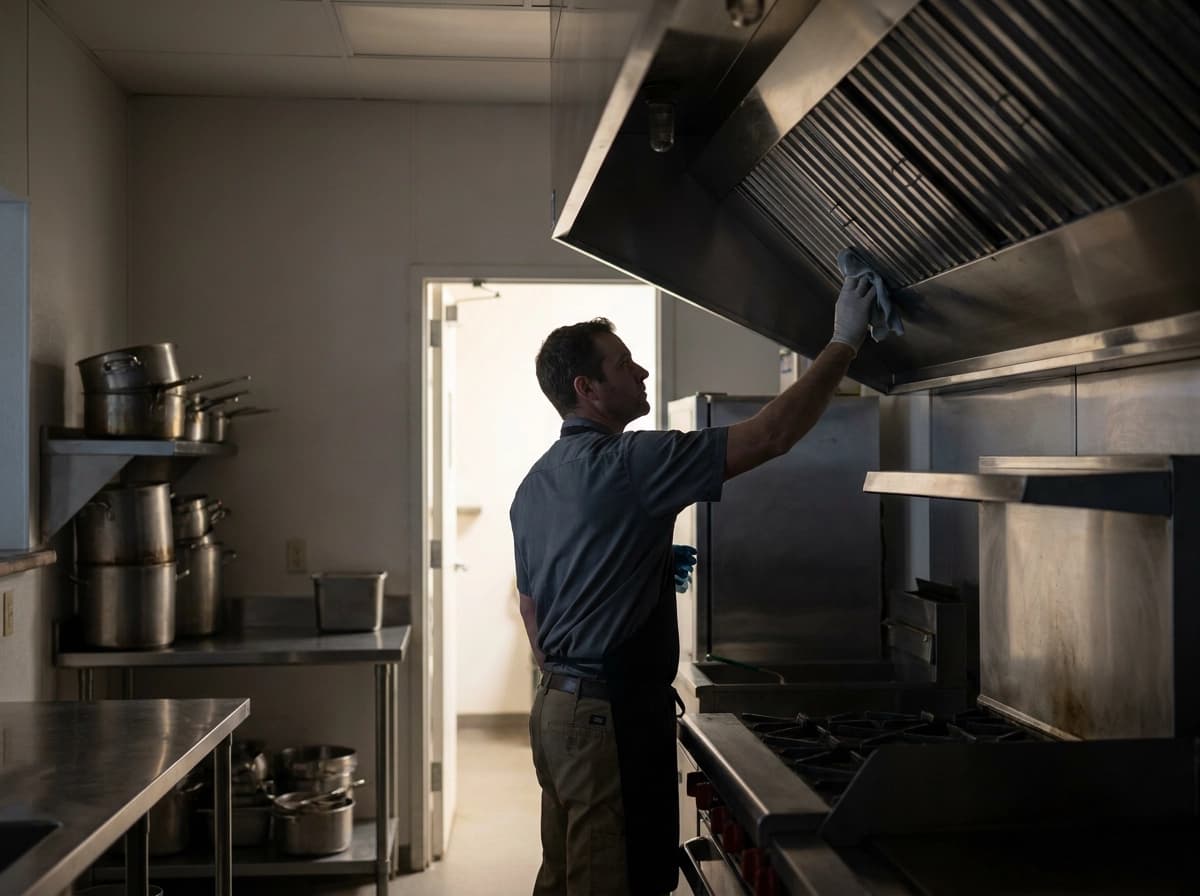
Those corridor-level differences translate directly into a scheduling reality that shapes every hood cleaning booking in North York: the midnight-to-5 a.m. window is not a convenience option; it is the only period when exhaust systems are fully cooled, kitchen staff are off-premise, and rooftop fan access does not conflict with adjacent tenants.
Building management approval compounds the constraint. In high-rise podium buildings along Yonge-Sheppard, property managers routinely require written work authorization before any trade crew accesses rooftop fans or utility shafts. That approval process takes time, and once granted, it typically specifies overnight hours to protect other tenants. A crew arriving without pre-cleared documentation does not get onto the mechanical floor, regardless of what the restaurant operator has arranged independently.
Noise bylaws add a separate layer of restriction. Toronto's noise bylaw limits certain industrial and loading activity after 11 p.m., but service activity is less likely to trigger noise complaints during the overnight window than during building operating hours. Residential floors above mixed-use towers are particularly sensitive to this.
Operators who book afternoon slots, typically 2-4 p.m., frequently discover that the mechanical room housing the exhaust fan requires a property manager escort, and that escort is not reliably available during business hours in multi-tenant buildings. The job stalls, or gets completed only partially.
Understanding what separates a professional kitchen hood cleaning service from a general-market operator matters here: documented overnight scheduling capacity and familiarity with North York's building sign-off processes are the difference between a completed service visit and a cancelled one.
NFPA 96 Compliance and What It Requires from North York Operators
Scheduling access is only half the compliance picture. Once a crew is in the building, the work itself must meet a specific regulatory standard carrying more enforcement weight than many operators realise.
NFPA 96 (Standard for Ventilation Control and Fire Protection of Commercial Cooking Operations) defines cleaning frequency by cooking volume and fuel type. Intervals run from monthly for solid-fuel and high-volume operations down to annually for low-volume or seasonal kitchens. Your category is not self-selected; it is determined by equipment output and usage patterns.
Tandoor ovens and high-output wok ranges are common along Finch Avenue West and in the Korean and Chinese restaurant clusters near Yonge-Sheppard. A tandoor operation requires monthly cleaning under NFPA 96; a high-output wok or charbroiling operation requires quarterly cleaning at minimum. Operators who default to once-a-year service because that is what they were originally quoted are already out of compliance.
Toronto Fire Services enforces fire safety requirements applicable to commercial kitchen exhaust systems; NFPA 96 is the recognised industry standard against which compliance is measured. Non-compliance with hood cleaning requirements can result in enforcement action, including required remediation before operations continue. In North York's high-rise commercial buildings there is an additional layer: fire safety plans maintained by building management often list hood cleaning schedules as a required maintenance record, so building management can flag non-compliance independently of any fire marshal visit.
A documented cleaning log is the evidence that protects an operator during an insurance claim or fire investigation. The log must capture the service date, technician credentials, and before-and-after inspection photos to carry evidentiary weight.
Power Hoods Systems issues post-service inspection reports and photo documentation aligned with NFPA 96 requirements. For a full overview of how those standards apply across Ontario kitchen formats, the Essential Guide to Kitchen Hood Cleaning in Ontario covers the compliance baseline in detail. Both building managers and insurance providers will accept this documentation as a compliant service record.
Yonge-Sheppard: High-Rise Podiums and the Building Management Variable
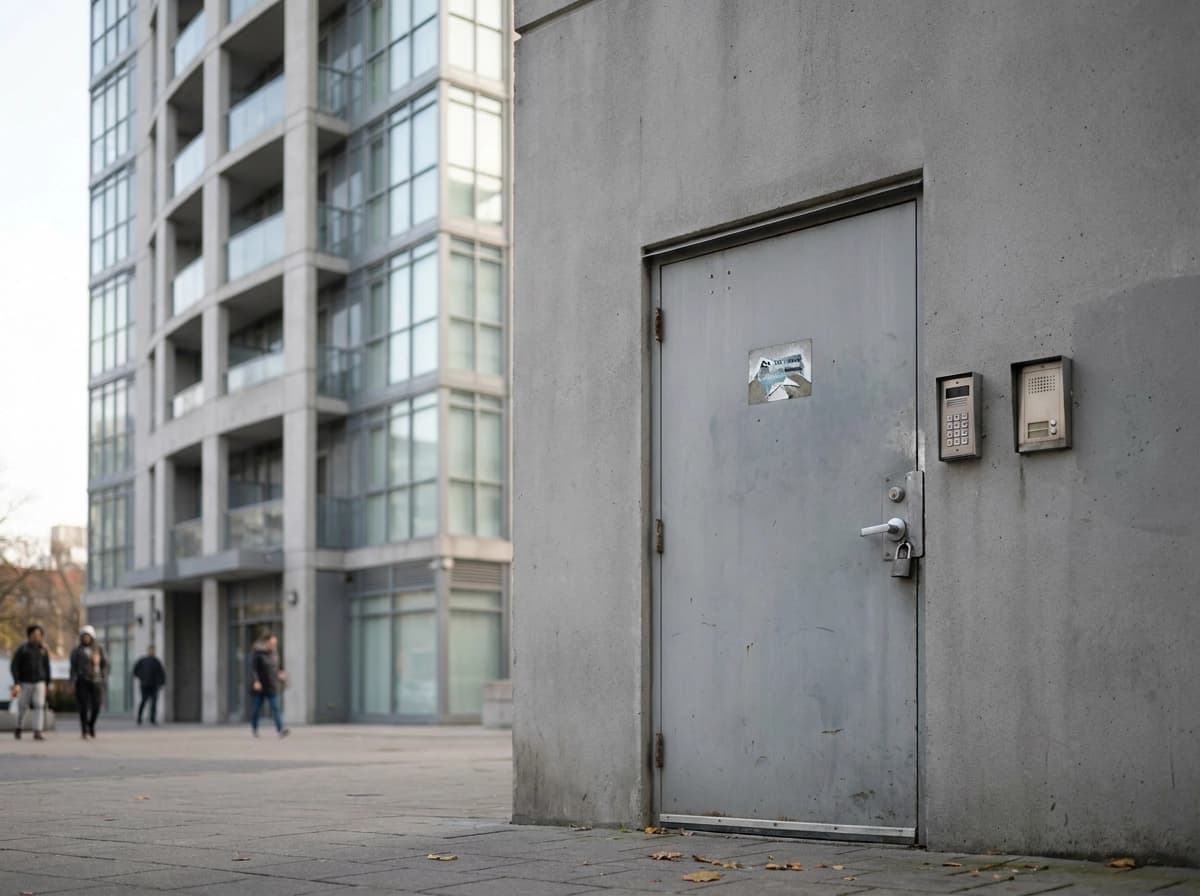
That compliance documentation requirement connects directly to a harder operational problem: getting a crew into the building in the first place.
Restaurants at Yonge-Sheppard occupy podium-level retail in large residential and mixed-use towers. Property management firms typically require any trade contractor to present a current WSIB clearance certificate, carry adequate commercial general liability insurance, and obtain written work authorization before after-hours access is granted.
Access is the variable most operators underestimate. Rooftop exhaust fan access requires either a keyed elevator override or a property manager escort to reach mechanical floors. A crew arriving at 1 a.m. without pre-confirmed access cannot improvise a solution. The restaurant owner agreeing to stay late does not override building security protocols. The job stops at the ceiling.
There is also a fire safety compliance dimension extending beyond a single tenant. Ontario Building Code Section 6.2.3.8 permits exhaust ducts serving similar occupancies to share vertical runs to a common roof outlet. Where that configuration exists, incomplete hood cleaning on one restaurant's system can affect the fire compliance status of neighbouring commercial tenants, which building management tracks independently.
Operators benefit from working with a commercial kitchen cleaning company that treats building management coordination as a pre-job process. Power Hoods Systems' experience across Ontario's urban corridors since 1993 includes the pre-authorization steps Yonge-Sheppard property managers require before any crew reaches a mechanical floor. Operators in comparable environments, such as those described in this overview of what Yorkville restaurant operators must know about hood cleaning, face similar building management layers, reinforcing why local corridor familiarity matters before a service vehicle arrives.
Finch and Wilson: Strip Plazas, Rear-Lane Access, and High-Heat Kitchens
Where Yonge-Sheppard's vertical complexity gives way to the strip-plaza format of Finch and Wilson, the access challenges shift rather than disappear.
Finch Avenue West's restaurant corridor is heavily anchored by tandoori, wok, and charcoal grill operations. These formats generate grease loads that are measurably higher than standard North American commercial kitchens. NFPA 96 reflects this: solid-fuel cooking systems require monthly cleaning under NFPA 96, and high-volume/charbroiling operations require quarterly cleaning at minimum, not the annual default that operators sometimes carry over from a previous, lower-volume kitchen. A provider quoting annual service to a full tandoor operation is quoting the wrong job.
Neither Finch nor Wilson strip plazas typically offer dedicated loading docks. Service access runs through shared rear lanes, and overnight parking enforcement in these corridors is real. A crew that arrives without a defined equipment-staging plan risks blocking shared access for neighbouring tenants or facing a parking enforcement issue mid-job. Experienced kitchen hood cleaning services arrive with a site-specific plan, not a general approach adapted on the spot.
Older plaza construction along Wilson and stretches of Finch introduces another variable. Exhaust infrastructure in these buildings is frequently retrofitted rather than purpose-built, meaning non-standard duct runs, manual dampers in unexpected locations, and fan housings that take longer to disassemble correctly. If your commercial cleaning vendor has never flagged any of this, it may be worth reviewing what generalist contracts actually cover in Ontario restaurant kitchens.
Power Hoods Systems' specialisation in high-volume tandoor and wok systems means these jobs are sized, scheduled, and completed within a single overnight window, without a follow-up visit to finish what time pressure cut short.
What to Look for in a Hood Cleaning Service Provider in North York
Choosing the right provider comes down to four concrete questions, not marketing claims.
Ask about North York building management experience specifically. A qualified provider should be able to describe the pre-authorization process for podium restaurant spaces at Yonge-Sheppard without prompting. The pre-authorization specifics covered in the Yonge-Sheppard section apply here, ask the provider to walk through their protocol unprompted. A vague answer identifies a general-market operator who will sort out those requirements during your service window, at your expense.
Treat overnight scheduling as a baseline requirement, not a negotiable add-on. Confirm it is standard before discussing anything else. Providers who price or staff overnight work as an exception are not built for North York's corridor environment.
Verify credentials and documentation capacity before signing anything. The provider should hold NFPA 96 certification, carry adequate liability insurance, and issue post-service reports that include technician credentials, full scope of work, and photo records. For a deeper look at what compliant documentation actually covers, see Restaurant Hood Cleaning: What Full Compliance Actually Requires. These are the records your building manager and insurer will request; a service receipt is not a substitute.
Match the provider's experience to your cooking format. A tandoor-and-wok kitchen has a fundamentally different grease load than a light-prep counter. The provider's frequency recommendation and time estimate should reflect your actual equipment, not a default annual schedule.
Power Hoods Systems provides 24/7 emergency service and overnight scheduling as standard, NFPA 96-compliant post-service documentation, and verified experience across Ontario's urban commercial corridors, including North York's most access-constrained building environments.
The Compliance Gaps That Appear When Operators Choose the Wrong Provider
Knowing what to verify in a provider is only half the equation. Understanding what goes wrong when operators skip that verification makes the decision concrete.
Incomplete cleaning, removing visible grease from the canopy and filters without accessing the full duct run, plenum, or rooftop exhaust fan, is the most consequential compliance failure pattern in commercial hood cleaning. The operator receives a service record; the system remains a fire risk. The access failure mode described for Yonge-Sheppard podiums applies here: a provider unfamiliar with mechanical floor protocols may be turned away at the elevator core, complete what they can reach, and issue documentation describing a full-system clean. The operator holds a compliance record that does not reflect actual system condition, creating serious exposure if a fire marshal examines the physical ductwork.
Daytime or early-evening scheduling compounds the access problem. Poor coordination between a service crew and building staff can extend jobs into morning prep hours, disrupting kitchen operations before the day has started.
Maintaining complete, accurate service records is essential; in the event of a kitchen fire, documentation of the exhaust system's maintenance history will be scrutinised by investigators and insurers alike.
Choosing a provider with demonstrated North York corridor experience is a risk management decision with direct consequences for fire safety, regulatory standing, and insurance coverage.
Book Your North York Hood Cleaning with the Right Service Window
Those compliance gaps are avoidable, and avoiding them starts with getting the booking details right before a crew ever arrives.
Confirm your NFPA 96 cleaning interval against your actual cooking format, not a generic annual schedule. A tandoor operation requires monthly cleaning under NFPA 96; a high-output wok or charbroiling operation requires quarterly cleaning at minimum. An annual default that might suit a low-volume kitchen will leave a high-heat operation out of compliance within months. If you are unsure of your correct interval, a site assessment resolves this before it becomes a fire inspection issue.
As detailed above, building management coordination and overnight scheduling are not extras, they are baseline requirements for this corridor environment.
Post-service documentation must be substantive. Technician credentials, a full scope of work, and before-and-after photo evidence are the minimum required to satisfy building management, Toronto Fire Services inspections, and insurance requirements.
Power Hoods Systems brings overnight scheduling, NFPA 96 certification, and 30-plus years across Ontario's most demanding commercial kitchens to every North York engagement. Before you book, review what Ontario operators need to demand from any hood cleaning provider, then contact the team to schedule a site assessment and confirm your service window.
Conclusion
North York's commercial corridors demand more than a standard hood cleaning appointment. Your location along Yonge-Sheppard, Finch, or Wilson shapes your service window, your access requirements, and your compliance obligations. Overnight scheduling is the baseline, not a premium add-on. Building management coordination is part of the service, not your responsibility to manage alone. And documentation must meet the standards that Toronto Fire Services, insurers, and property managers actually enforce.
Operators who treat hood cleaning as a checkbox risk the gaps that trigger failed inspections, voided coverage, and unplanned closures. Getting it right means choosing a provider built specifically for how North York kitchens operate.
Contact Power Hood Systems to schedule your site assessment, confirm your service window, and ensure your exhaust system meets NFPA 96 requirements before your next inspection arrives.
FAQS
Why is overnight scheduling so important for hood cleaning in North York?
Overnight scheduling (midnight to 5 a.m.) is essential in North York because it's the only period when exhaust systems are fully cooled, kitchen staff are off-premise, and rooftop fan access doesn't conflict with adjacent tenants. Additionally, building management in high-rise podiums typically requires overnight hours to protect other residents, and it aligns with Toronto's noise bylaws that restrict industrial activity after 11 p.m. during regular business hours. Daytime scheduling often leads to mechanical room access delays and can extend into morning prep hours, disrupting operations.
How often does NFPA 96 require hood cleaning for different cooking formats?
NFPA 96 cleaning frequency depends on your cooking format and volume. Tandoor ovens and solid-fuel cooking systems require monthly cleaning. High-output wok ranges and charbroiling operations require quarterly cleaning at minimum. Low-volume or seasonal kitchens may be permitted annual cleaning. Your specific interval is determined by your equipment output and usage patterns, not by a default annual schedule. Operators in high-heat kitchens who default to annual service are already out of compliance.
What building management requirements should I expect at Yonge-Sheppard podium restaurants?
Property management firms at Yonge-Sheppard require trade contractors to present a current WSIB clearance certificate, carry adequate commercial general liability insurance, and obtain written work authorization before after-hours access is granted. Rooftop exhaust fan access requires either a keyed elevator override or a property manager escort to reach mechanical floors. A crew arriving without pre-confirmed access cannot proceed. This pre-authorization process must be completed well in advance of the service appointment.
What documentation must a hood cleaning service provide to meet compliance requirements?
Compliant hood cleaning documentation must include the service date, technician credentials, full scope of work, and before-and-after inspection photos. This documentation satisfies Toronto Fire Services, building management, and insurance requirements. A simple service receipt is not sufficient. This documentation becomes critical evidence during fire investigations and insurance claims. Building managers often track these records as part of their fire safety compliance obligations.
What happens if a hood cleaning service only cleans visible surfaces but doesn't access the complete duct system?
Incomplete cleaning that only removes visible grease from the canopy and filters without accessing the full duct run, plenum, or rooftop exhaust fan is a serious compliance failure. The operator receives documentation that doesn't reflect actual system condition, creating a fire risk while appearing compliant on paper. This often occurs when service crews lack familiarity with mechanical floor access protocols and get turned away at access points. If a fire marshal examines the physical ductwork, investigators will discover the system wasn't properly cleaned, creating serious liability and insurance coverage exposure.