
Mississauga is not a single commercial kitchen market. It is three distinct operating zones, each with its own grease load profile, access constraints, and compliance timeline. The Square One hospitality strip runs late and hard. The Heartland retail corridor stacks food court tenants into shared exhaust systems. Port Credit's independent restaurants operate on tighter schedules and thinner margins. What each of these zones shares is a non-negotiable requirement: regular, documented kitchen exhaust hood cleaning that meets NFPA 96 standards and satisfies Ontario Fire Code inspections.
Grease accumulation inside ductwork, plenums, and rooftop fans is one of the leading causes of commercial kitchen fires, and it is precisely the kind of buildup that discount services miss when they clean only what is visible. This post breaks down how Mississauga's commercial kitchen geography shapes service logistics, what complete professional hood cleaning actually involves, and how Power Hood Systems structures overnight and emergency scheduling to match each zone's operating reality. If you manage a commercial kitchen anywhere from Port Credit to Heartland, this is the operational context you need.
Why Mississauga's Commercial Kitchen Geography Demands a Different Approach
Mississauga is not a single commercial kitchen market. It is three operationally distinct zones that share a city boundary and little else. The Square One hospitality corridor runs full-service restaurants and hotel kitchens well past midnight. Heartland's retail food courts close early and operate inside mall-management access frameworks with contractor protocols and designated service windows. Port Credit's independent restaurant strip runs on owner-operator schedules, with cuisine diversity ranging from tandoor-based South Asian kitchens to wok-intensive formats that each produce different grease-load profiles.
A provider running a fixed quarterly rotation across all three zones will inevitably mismatch cleaning frequency to operational intensity. A late-night Square One operator generating high grease loads needs more frequent service than that rotation delivers. A Heartland food court unit cannot simply receive an overnight crew without prior coordination with mall facilities management. Applying the same schedule to both does not save money; it creates compliance and fire safety exposure that neither the operator nor their insurer can afford.
The fire risk behind these scheduling decisions is direct: grease buildup in kitchen exhaust hoods and ductwork is a leading contributor to commercial kitchen fires. Cleaning frequency must track operational intensity, not arbitrary calendar intervals.
Ontario Fire Code inspections and commercial kitchen insurance policies both require documented proof of recent professional cleaning. A compliance certificate tied to the wrong service interval, or issued without full-system scope, creates real liability exposure at renewal or inspection time.
Power Hoods Systems has documented service history across all three Mississauga corridors, including high-volume QSR locations, providing direct working knowledge of each zone's access constraints and scheduling requirements.
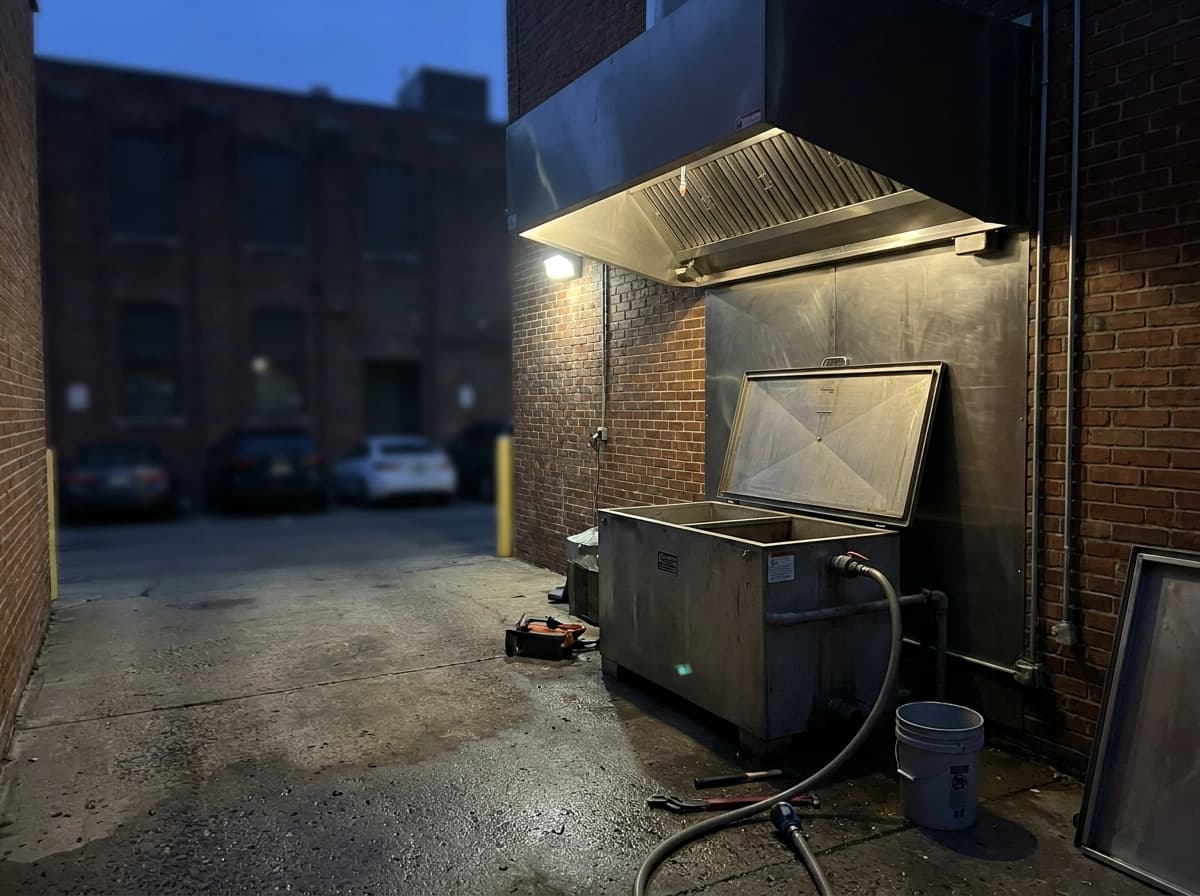
Square One Hospitality Cluster: Late-Night Operations and High-Grease-Load Systems
The Square One strip keeps kitchens running well past midnight. Entertainment venues, hotel food and beverage operations, and full-service restaurants in this corridor routinely serve past 1:00 a.m., which compresses the viable service window to roughly 2:00 a.m. through 6:00 a.m. That four-hour window is not flexible, and it does not expand.
The grease loads these kitchens produce match their throughput. High-turnover full-service restaurants and hotel kitchens operating at this volume fall into the high-volume classification under NFPA 96 cleaning frequency guidelines, which places them on a quarterly schedule at minimum. Some hotel banquet operations, running back-to-back events with charbroilers and high-output ranges, warrant more frequent commercial kitchen exhaust cleaning. Understanding what hood cleaning services actually include matters here: quarterly service that only addresses visible surfaces does not satisfy the standard.
Access logistics add a layer of complexity that providers without direct experience in this corridor underestimate. Multi-storey hospitality properties require advance coordination with building management for rooftop fan access, freight elevator scheduling, and shared exhaust shaft protocols. These arrangements cannot be improvised on arrival.
Hotel banquet and conference kitchen systems compound the challenge further. Multiple hood canopies, extended duct runs, and rooftop exhaust fans separated by mechanical floors mean each service visit covers significantly more ground than a single-unit restaurant. Scope and timing must be established before crews arrive, not discovered on site.
Power Hoods Systems structures overnight scheduling specifically around this window. Crews arrive after last service closes, complete full-system cleaning from hood canopy through plenum, ductwork, and rooftop exhaust fan, and clear the kitchen before morning prep begins.
Heartland Retail Corridor: Food Court Access Logistics and Shared Exhaust Systems
The Heartland retail corridor presents a structurally different set of challenges than Square One's late-night hospitality strip. Access here is governed by mall management, not individual operators. Service providers must enter and exit within designated off-hours windows, work under signed contractor protocols, and in many cases move through the facility with a security escort. Coordinating that access requires advance communication with Heartland's facilities team, not simply booking a time with the restaurant itself.
The shared exhaust infrastructure compounds this complexity. Many food court configurations route multiple tenant stalls through a single plenum or duct chase. Grease accumulation from one high-volume operator, a charbroiler station running through a lunch and dinner rush, raises the fire risk profile for every unit connected to that branch. Cleaning one stall without addressing the shared system leaves the entire branch non-compliant.
QSR and fast-casual formats dominate Heartland's food court mix. Charbroilers, high-output fryers, and wok stations generate grease loads that place most of these kitchens in the quarterly service range under NFPA 96 standards. Understanding exactly what a compliant cleaning scope covers for these systems is essential; the Commercial Vent Cleaning: The Complete NFPA 96 Compliance Guide for Ontario Operators outlines the full exhaust path requirements that apply to food court units.
Power Hoods manages the mall coordination directly, handling communication with facilities management so individual operators are not navigating contractor approval processes themselves. Documentation after each visit is prepared in multiple copies, covering both the tenant's insurance requirements and the property manager's NFPA 96 compliance records, with before-and-after photo packages included for both audiences.
Port Credit Independent Restaurant Zone: Flexibility for Single-Location Operators
Where Heartland's challenge is institutional complexity, Port Credit's is the opposite: small, independent operators navigating compliance on their own, without a corporate facilities team behind them.
Port Credit's restaurant strip is dominated by single-location owners running neighbourhood bistros, ethnic dining rooms, and owner-operated cafes. Their scheduling realities differ sharply from chain accounts. Tighter prep-to-close cycles compress the viable service window, and when a booking needs to shift, an independent owner bears that disruption personally. Rescheduling flexibility is not a courtesy; it is a practical requirement of serving this zone.
Cuisine diversity here also has direct implications for grease load. Tandoor-based South Asian kitchens, wok-intensive Chinese and Southeast Asian restaurants, and wood-fired Mediterranean concepts each produce distinct grease profiles, with different accumulation rates, viscosities, and deposit locations within the exhaust system. A technician who treats every hood as interchangeable will misread those differences and under-clean accordingly.
Power Hoods Systems has worked on tandoor and wok systems since 1993, giving technicians direct equipment familiarity rather than relying on a generic protocol. That hands-on experience matters when a kitchen's grease load does not match the pattern a technician expects. Understanding what a compliant commercial hood cleaning service actually covers is particularly relevant for independent operators who may not have encountered a full-system scope before.
For Port Credit's single-location operators, each cleaning visit also functions as a compliance checkpoint. The NFPA 96 certificate and service report produced after every Power Hoods visit are typically the primary documents an owner presents when renewing commercial kitchen insurance or responding to a Mississauga Fire Services inspection.
What a Complete Commercial Kitchen Exhaust Cleaning Service Actually Covers
Regardless of cuisine type or corridor, every commercial kitchen exhaust cleaning service must cover the complete air path: hood canopy, grease filters, plenum chamber, full duct run, and the rooftop or wall-mounted exhaust fan. Providers who clean only the visible hood surfaces and filters are the most common failure mode among discount operators, and the most predictable source of compliance problems.
The reason is straightforward. Grease accumulates heaviest in the ductwork, plenum, and exhaust fan, precisely because those areas are out of sight. Technicians must remove access panels to reach and clean them properly. A system that looks clean at canopy level can carry a dangerous grease load two metres up the duct run, and that is where Ontario Fire Code inspections identify compliance failures most frequently.
Service duration for a standard single-hood commercial system runs two to four hours, varying with system size, grease buildup level, and how accessible the components are. Hotel kitchens, multi-hood configurations, and extended duct runs take considerably longer and should be scoped before scheduling to avoid incomplete work within a compressed overnight window.
Documentation is not optional. After every visit, a compliant provider delivers before-and-after photographs, a written service report, and an NFPA 96 compliance certificate. Ontario insurance carriers require these documents, and fire departments audit them.
Cleaning frequency scales with operational intensity under NFPA 96: monthly for solid-fuel operations; every one to three months for high-volume and 24-hour kitchens; every six months for moderate-volume casual dining; annually for low-volume or seasonal operations. Understanding which commercial cleaning services carry the most weight for compliance helps operators prioritize correctly before an inspection or insurance renewal surfaces a gap.
NFPA 96 Compliance and Ontario Fire Code Requirements for Mississauga Kitchens
Those documents and certificates matter only when they are properly formatted and retained. NFPA 96 defines the authoritative standard for ventilation control and fire protection of commercial cooking operations, establishing the baseline for cleaning frequency, scope, and documentation that Ontario fire authorities reference during inspections. The Ontario Fire Code adopts and enforces these requirements, which means a Mississauga kitchen operator's compliance obligation is not theoretical.
Mississauga Fire Services inspects commercial kitchens and can issue orders to cease operations when operators cannot produce a current cleaning certificate from a qualified provider. The certificate itself is the evidence of compliance; without it, a recently cleaned system offers no protection against an enforcement order.
Insurance exposure is equally direct. Ontario commercial kitchen insurers increasingly require documented proof of professional exhaust hood cleaning as a condition of coverage. An undocumented or overdue system can void a fire damage claim outright, regardless of all other policy terms. Before your next renewal, confirm your cleaning records satisfy your carrier's specific documentation requirements. Reviewing what Ontario restaurants must demand from a cleaning service before hiring a provider is a practical first step toward closing that gap.
This compliance pressure has reshaped how the industry classifies the work itself. Professional exhaust hood cleaning is now treated as specialized fire-safety work performed by trained technicians, not a general maintenance or janitorial task. Insurers and fire authorities reflect that classification in how they evaluate a service record; a certificate from an unqualified vendor carries no compliance weight.
Power Hoods Systems issues NFPA 96 compliance certificates after every service visit, formatted to meet Mississauga Fire Services inspection requirements and Ontario insurance carrier audit standards.
Overnight and Emergency Scheduling Across All Three Mississauga Zones
Compliance requirements mean nothing if a provider cannot show up when the kitchen is actually available to be serviced.
Across all three Mississauga corridors, that availability window is the same in principle: cleaning must occur when the kitchen is not in service. In practice, that means overnight or early-morning blocks before prep begins. The difference between zones is not the constraint itself but when and how that window opens, and who controls access to it.
Recurring schedules at Power Hoods Systems are built around each zone's operational calendar. Square One hospitality accounts run on consistent overnight rotations tied to late-night close times. Heartland food court service is coordinated directly with mall facilities management, fitting within approved contractor windows that individual operators cannot negotiate alone. Port Credit independents, with tighter prep-to-close cycles, need scheduling flexibility rather than rigid rotation dates.
When Compliance Is Urgent, Scheduling Cannot Wait
Emergency capability is where the scheduling model is tested most directly. A kitchen that receives a fire department compliance order on a Tuesday afternoon cannot wait two weeks for the next available slot. A failed inspection, a grease fire incident, or an insurance carrier deadline creates an immediate obligation, and a provider who cannot mobilize that night is not a solution.
Power Hoods Systems operates 24/7 emergency scheduling for exactly these situations, covering all three Mississauga zones. The response model matters because compliance deadlines are imposed on the operator's timeline, not the provider's.
The broader scheduling logic, including how cuisine type and grease-load profiles affect interval planning, is covered in detail in Mississauga Restaurants and Hood Cleaning Compliance by Cuisine Type.
The consistent principle across all zones: Power Hoods absorbs the coordination complexity so operators focus on running their kitchens, not managing logistics.
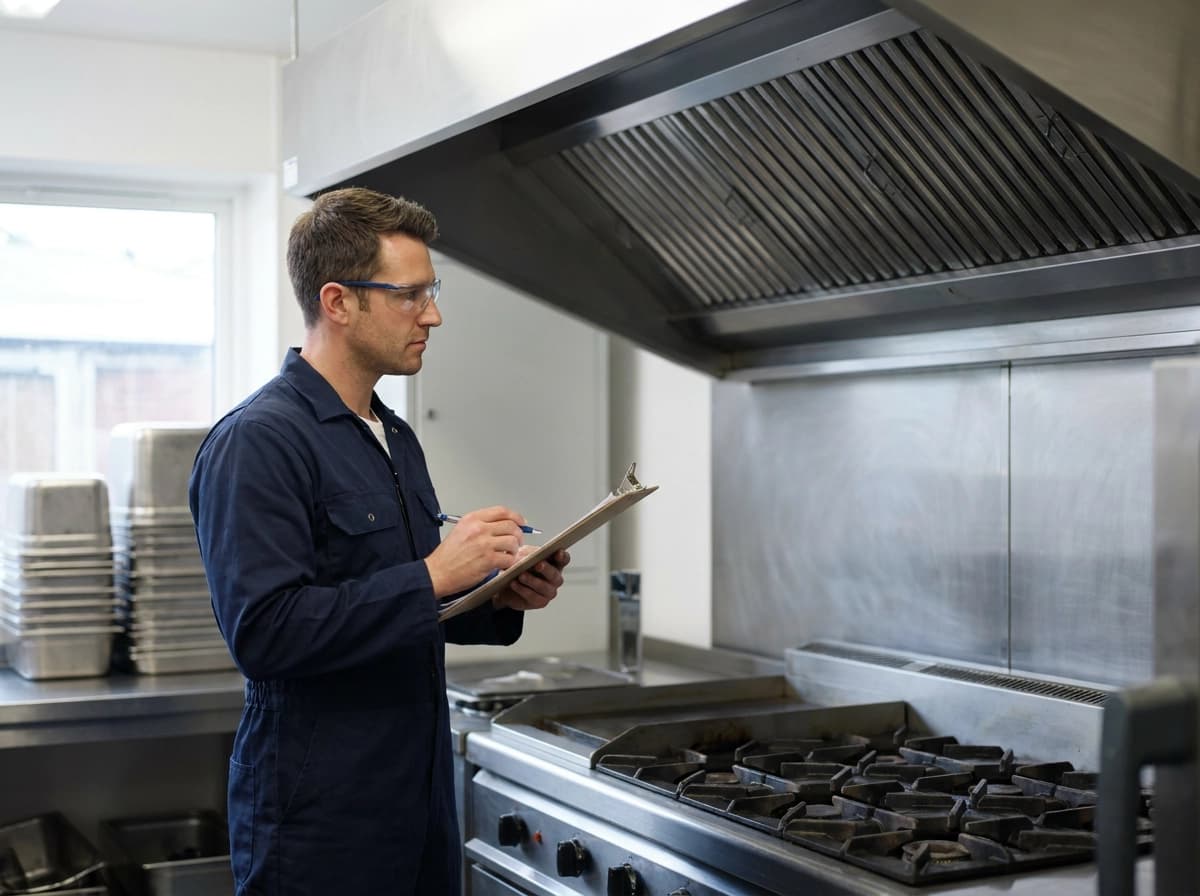
Book Exhaust Hood Cleaning Tailored to Your Mississauga Location
What that zone-by-zone scheduling structure makes possible is a cleaning programme that actually fits your operation, not a generic rotation imposed on it.
If you operate in Square One, Heartland, or Port Credit, your access constraints, grease-load profile, and viable service window are not interchangeable. The right provider maps service to those specifics before the first visit, not after a missed inspection.
Before your next insurance renewal or fire department review, confirm two things: that your cleaning frequency matches your kitchen's volume and cuisine type under NFPA 96 guidelines, and that your current provider is cleaning the full air path, from hood canopy through ductwork to the rooftop exhaust fan. A certificate tied to a partial clean or the wrong frequency interval creates liability exposure, not protection.
When requesting a quote, ask for full-system scope, NFPA 96 compliance documentation with before-and-after photos, and a scheduling plan built around your operating hours. Those three elements together are what satisfies both Mississauga Fire Services inspections and Ontario insurance carrier requirements.
For operators weighing compliance obligations in other Ontario markets, our analysis of kitchen exhaust hood cleaning risks and regulatory requirements in Ottawa covers NFPA 96 standards, cost benchmarks, and documentation expectations in detail.
Power Hoods Systems has served Mississauga commercial kitchens since 1993, across more than 5,000 projects. Contact the team to schedule overnight, recurring, or emergency exhaust hood cleaning service for your location.
Conclusion
Mississauga's commercial kitchen landscape is not uniform, and your exhaust hood cleaning strategy should not be either. Three takeaways matter most: your grease load and cuisine type determine legally required cleaning frequency under NFPA 96; full-system cleaning from canopy to rooftop fan is the only standard that satisfies Ontario Fire Code and insurance carrier requirements; and your service window, whether overnight in Square One, coordinated in Heartland, or flexible in Port Credit, must be planned in advance.
Operators who treat exhaust cleaning as a checkbox risk certificate gaps, failed inspections, and real liability exposure. Those who treat it as a scheduled, documented, location-specific service protect their kitchens, their staff, and their business continuity.
Contact Power Hoods Systems today to schedule a full-system clean built around your Mississauga location, your operating hours, and your compliance timeline. Thirty years of service. One standard: complete protection.
FAQS
What are the three distinct commercial kitchen zones in Mississauga and how do they differ?
Mississauga has three distinct operating zones: Square One (late-night hospitality strip with restaurants and hotels running past 1:00 a.m. and high grease loads), Heartland (retail food court corridor with shared exhaust systems and mall access restrictions), and Port Credit (independent restaurants with diverse cuisines, tighter schedules, and varying grease profiles). Each zone requires different service scheduling, access coordination, and compliance approaches tailored to its operational intensity and infrastructure.
How often should commercial kitchen exhaust hoods be cleaned under NFPA 96 standards?
Cleaning frequency under NFPA 96 depends on operational intensity: monthly for solid-fuel operations, every 1-3 months for high-volume and 24-hour kitchens, every 6 months for moderate-volume casual dining, and annually for low-volume or seasonal operations. Your cleaning schedule must match your actual grease load and operating volume, not arbitrary calendar intervals, to maintain compliance and fire safety.
What does a complete commercial kitchen exhaust cleaning service actually include?
A complete professional cleaning covers the entire air path: hood canopy, grease filters, plenum chamber, full duct run, and rooftop or wall-mounted exhaust fan. Discount services that only clean visible hood surfaces miss the dangerous grease buildup in ductwork and exhaust fans—the areas where Ontario Fire Code inspections most frequently identify compliance failures. Full-system service typically takes 2-4 hours for a single hood and includes before-and-after photos and NFPA 96 compliance certification.
What documentation is required for NFPA 96 compliance and insurance purposes?
After every service visit, you must receive before-and-after photographs, a written service report, and an NFPA 96 compliance certificate. These documents are required by Ontario insurance carriers and audited by fire departments. Without current documented proof of professional cleaning, a recently cleaned system offers no protection against fire department enforcement orders, and undocumented or overdue cleaning can void fire damage claims outright during insurance renewal.
What should I ask for when requesting an exhaust hood cleaning quote?
Request three essential elements: (1) full-system scope that covers the complete air path from hood canopy through ductwork to the rooftop exhaust fan, (2) NFPA 96 compliance documentation with before-and-after photos, and (3) a scheduling plan built around your operating hours. These three components together satisfy both Mississauga Fire Services inspection requirements and Ontario insurance carrier standards, protecting your business from compliance gaps and liability exposure.