

It’s 2 AM on a Saturday, and restaurant grease trap cleaning is the last thing on your mind… until your commercial kitchen sink backs up with greasy water. Now you’ve got a smell that could knock out your dishwasher and 200 brunch reservations in eight hours.
This is the part nobody puts on Instagram. A full restaurant grease trap can trigger health code violations, fines, and shutdowns. In Ontario, it can also put you on the wrong side of the Ontario Fire Code and your insurance policy. And yes—those consequences can hit fast.
You’re here because you want to stay open, stay compliant, and stop FOG problems before they turn into a Monday morning disaster. This guide breaks down why restaurant grease trap cleaning matters, how often to do it, what it costs in Ontario, and how to pick the right team to handle it.
What Is a Restaurant Grease Trap and How Does It Work?
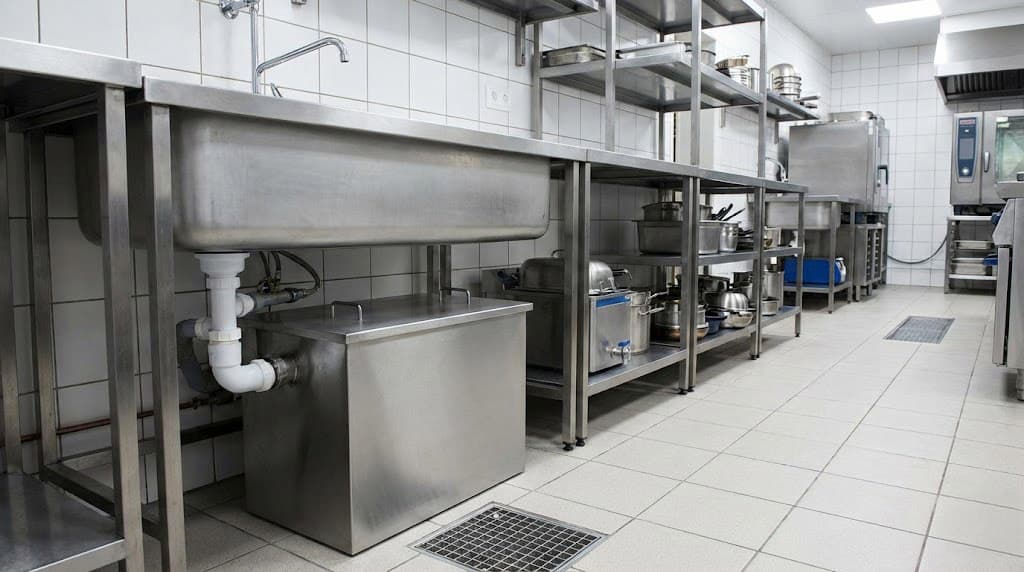
A grease trap for a restaurant is a plumbing device that stops FOG (Fats, Oils, Grease) before it hits your drain lines. Your trap protects your sinks, your pipes, and your city sewer connection.
FOG buildup -> causes -> drain clogs. Drain clogs -> trigger -> shutdowns. Shutdowns -> cost -> real money.
That’s the chain reaction. Restaurant grease trap cleaning breaks it.
The Role of Grease Interceptors in Commercial Kitchens
Your kitchen sends wastewater from the sink for restaurant use, prep sinks, mop sinks, and sometimes floor drains. That water carries oil, butter, meat fat, sauce sludge, and food scraps.
A commercial grease interceptor slows that water down. Grease floats up. Solids sink down. Cleaner water exits through the middle and moves into your restaurant plumbing.
If you skip restaurant grease trap cleaning, that separation fails. The grease layer grows. The solids layer grows. Then the trap pushes grease downstream like a bad decision with great confidence.
Types of Commercial Grease Traps (Under-Sink vs. Outdoor)
Most Ontario restaurants use one of two setups:
1) Commercial under sink grease trap
You’ll find this under a three-compartment sink or prep sink. It works for smaller kitchens and lower flow.
2) Grease trap outside restaurant (gravity interceptor)
You’ll find this in the parking lot, loading area, or buried near the building. It handles higher volume and heavier grease loads.
You’ll also hear terms like:
- commercial grease trap
- grease tank for restaurant
- commercial grease separator
- grease traps for commercial kitchens
- grease traps in commercial kitchens
Your trap size often ties to flow rate, measured in GPM grease trap ratings (gallons per minute). A small café might run 20–50 GPM. A busy hotel kitchen can run far higher, especially with multiple fixtures feeding the system.
Either way, restaurant grease trap cleaning keeps the trap doing its one job: stop grease from wrecking your kitchen.
Why Grease Trap Maintenance Can't Be Ignored
Grease doesn’t “go away.” Grease builds. Your staff can rinse it. Your dish machine can blast it. But grease still ends up in the trap.
Neglected grease traps -> cause -> violations. FOG buildup -> blocks -> commercial kitchen drains. No records -> risk -> insurance trouble.
If you run a food operation in Ontario, restaurant grease trap cleaning isn’t optional. It’s how you stay open.
How Restaurant Grease Trap Cleaning Prevents Health Code Violations and Fines in Ontario
Health inspectors care about sanitation, odours, pests, and backups. A full trap hits all four.
A grease trap that overflows can contaminate prep areas and create unsafe working conditions. That turns into inspection notes, orders, and re-checks.
Toronto also requires grease traps for food service businesses. The City warns that missing or non-working traps can lead to conviction and fines up to $100,000.
You don’t want a trap issue to become “the reason you got flagged.” You want restaurant grease trap cleaning to be boring. Boring is good.
Fire Hazards from FOG Buildup
Grease doesn’t just block drains. Grease feeds fires.
Most fires in eating and drinking establishments start with cooking equipment. Ontario’s Fire Code also requires commercial cooking exhaust systems to be maintained in line with NFPA 96.
Grease buildup -> increases -> fire risk. Grease buildup -> reduces -> suppression effectiveness.
Power Hoods Systems works in fire safety every day. We clean hoods. We clean ducts. We handle grease traps too. The pattern stays the same: kitchens that schedule restaurant grease trap cleaning also prevent bigger grease problems across the whole system.
Insurance Coverage Requirements for Commercial Kitchens
Insurance companies love paperwork. Your kitchen doesn’t.
If a fire or sewage backup happens, your adjuster will ask one question fast: “Can you prove regular maintenance?”
If you can’t prove it, you can face delays, reduced payouts, or a denied claim.
Documented restaurant grease trap cleaning helps protect you. It also supports your health inspection file. That’s why Power Hoods Systems provides before/after photos and service records that you can actually use.
Regular maintenance -> protects -> insurance coverage. No records -> risks -> claim trouble.
Signs Your Restaurant Grease Trap Needs Immediate Cleaning
You don’t need a crystal ball. Your kitchen gives warning signs.
When your trap hits the danger zone, the symptoms show up fast. Most “emergency” grease trap calls start as “we noticed something weird last week.”
Power Hoods Systems responds to Ontario emergency calls every month. These are the signs we see right before a shutdown.
Slow Drains and Backed-Up Commercial Kitchen Sinks
Slow drains don’t mean “try a stronger soap.” Slow drains mean your trap is full or your line has grease buildup.
A clogged commercial kitchen sink drains like a tired bartender at last call. It gives up.
Watch for:
- water pooling in the restaurant kitchen sink
- gurgling sounds after rinse cycles
- backups in the commercial kitchen sink waste line
- a struggling restaurant garbage disposal (if you have one)
If you keep pouring hot water and praying, you just push grease further down the system. That’s how you go from restaurant grease trap cleaning to a full-on plumbing nightmare.
Foul Odors That Drive Customers Away
A full trap creates sulphur smells, rancid oil smells, and “what died in here?” smells. Odours travel from BOH to FOH faster than you think.
Odours -> affect -> customer reviews. Odours -> affect -> staff morale.
You can’t candle-spray your way out of this one. Restaurant grease trap cleaning removes the source.
Visible Grease Overflow Around the Trap
Overflow is the “too late” sign.
You might see:
- grease on the floor around the trap lid
- greasy sludge near the commercial sink grease trap outlet
- grease film in nearby floor drains
- greasy water creeping back into your sinks
At that point, you need restaurant grease trap pumping and proper wash-down, not a quick rinse.
How Often Should Commercial Grease Traps Be Cleaned?
Most Ontario restaurants need restaurant grease trap cleaning every 30 to 90 days. Some kitchens need it more often. Some can stretch it out. Your volume decides the schedule.
Many Ontario operators follow the 25% rule. You pump out before FOG and solids exceed 25% of the interceptor’s working volume.
Ontario Regulations and Municipal Requirements
Ontario cities control sewer discharge rules, and they enforce grease control through bylaws and inspections.
Toronto requires grease traps for most food service businesses. Toronto also sets servicing expectations and recordkeeping through its Code of Practice.
You don’t want to guess on compliance. You want a schedule you can show an inspector.
That’s why Power Hoods Systems builds your documentation into every restaurant grease trap cleaning visit.
Factors That Affect Cleaning Frequency (Restaurant Size, Type, Volume)
Your cleaning frequency changes based on:
- your menu (fried food = more grease)
- your seat count
- your hours (late-night kitchens load traps hard)
- your dish volume
- your grease interceptor size
Real-world examples in Ontario:
1) A 50-seat restaurant in Toronto’s Entertainment District
High weekend traffic. Heavy dish cycles. Grease load climbs fast. This kitchen often needs restaurant grease trap cleaning every 4–6 weeks to avoid drain backups.
2) A high-volume hotel kitchen in Ottawa
Multiple outlets feed one system. Banquet prep pushes FOG hard. This operation might need monthly commercial grease trap cleaning plus quarterly deep inspection.
3) A pizza restaurant in Mississauga
Cheese and oil create thick FOG layers. Many pizza kitchens need grease trap cleaning for restaurants every 6–8 weeks, even if the dining room looks calm.
Your trap doesn’t care if you feel “not that busy.” It only cares about grease volume.
Creating a Grease Trap Maintenance Schedule
A simple schedule keeps you out of trouble.
- Check the trap weekly (quick visual + odour check)
- Schedule restaurant grease trap cleaning every 30–90 days
- Follow the 25% rule as your hard limit
- Keep a maintenance log for inspections and insurance
- Adjust based on real grease levels
Power Hoods Systems can set this up for you. We service Ontario kitchens across Toronto, Mississauga, Hamilton, Brampton, Vaughan, Ottawa, and beyond.
The Professional Grease Trap Cleaning Process
Professional restaurant grease trap cleaning should do more than “pump and run.” You need removal, cleaning, inspection, and records.
When you hire Power Hoods Systems, you get a process that supports compliance and protects your kitchen.
Assessment and Pumping
Our technicians start with a quick assessment:
- trap type (under-sink vs. interceptor)
- grease level and solids level
- access points and flow direction
- signs of failure (broken baffles, loose lid seals)
Then we perform commercial grease trap pumping or restaurant grease trap pumping based on your setup.
A full trap -> causes -> sewer gas smells. A pumped trap -> restores -> separation performance.
High-Pressure Cleaning and Inspection
After pumping, we clean the interior surfaces. We remove stuck grease. We clear baffle areas. We check flow.
This is where cheap work shows. Some companies pump the grease and leave the walls coated. That leftover grease starts smelling again in days.
Professional cleaning grease trap commercial work includes:
- scraping thick FOG deposits
- high-pressure rinse where safe
- checking inlet/outlet flow
- confirming the trap seals properly
This step keeps commercial grease cleaning from turning into “we’ll be back next week anyway.”
Documentation for Health Inspectors and Insurance
You need proof. You need time stamps. You need photos.
Power Hoods Systems provides:
- before/after photos
- service records you can file
- maintenance notes for your compliance binder
- support for insurance documentation
Your records help you during health inspections. Your records help you after a claim. That’s why restaurant grease trap cleaning needs paperwork, not just pumping.
DIY vs. Professional Restaurant Grease Trap Cleaning
Yes, you can do some trap work in-house. No, you shouldn’t run your full system that way.
DIY can reduce small under-sink grease load in a pinch. DIY also creates mess, missed buildup, and disposal problems.
Why DIY Grease Trap Maintenance Falls Short
DIY usually fails for three reasons:
- Staff can’t fully remove compacted grease
- Staff can’t inspect internal parts properly
- Staff can’t dispose of waste the right way
DIY -> misses -> baffle buildup. Missed buildup -> causes -> repeat backups.
Professional restaurant grease trap cleaning stops the cycle.
The Hidden Costs of Improper Cleaning
Improper cleaning often leads to drain emergencies, odour complaints, and wasted labour.
A sewage backup cleanup can cost $2,000 to $15,000 depending on severity and damage. That number jumps when you lose service hours on a weekend.
When you pay for restaurant grease trap cleaning, you usually avoid the big invoice later.
NFPA 96 Certification and What It Means for Your Business
Power Hoods Systems uses NFPA 96 certified technicians because grease connects to fire safety. Ontario’s Fire Code references NFPA 96 for commercial cooking exhaust maintenance.
That certification matters because it shows the team understands grease risk from the hood to the drain line. It also supports your compliance story when inspectors or insurers ask questions.
What to Look for in a Commercial Grease Trap Cleaning Service
Not all grease trap providers work the same. Some show up late, pump fast, and disappear. That’s not what you need in Ontario food service.
You need a company that treats grease like a safety problem, not a quick job.
Certifications and Insurance Coverage
Ask these questions:
- Are you licensed and insured?
- Do you understand commercial kitchen grease trap guidelines?
- Do you provide compliance documentation?
- Do you know how commercial grease trap installation and repair affects performance?
Power Hoods Systems checks all the boxes. We’ve been in business since 1993. We’ve completed 5,000+ projects across Ontario. We provide documentation that supports inspections and claims.
24/7 Emergency Service Availability
Grease doesn’t wait for office hours.
A grease trap overflow can shut down your sinks, prep line, and dish area fast. That’s why “we’ll come next Tuesday” doesn’t work.
Power Hoods Systems offers 24/7 emergency response across Ontario. If you search restaurant grease trap cleaning near me during a crisis, you need a real answer, not voicemail.
Complete Documentation and Compliance Support
Your service provider should give you:
- records for every visit
- photo evidence
- notes you can show inspectors
- clear next-step recommendations
That’s what good commercial grease trap service looks like. It’s also what protects you from repeat problems.
Grease Trap Cleaning Costs in Ontario: What to Expect
Costs vary across Ontario, but here’s what actually drives the number.
Factors That Influence Commercial Grease Trap Cleaning Prices
Your grease trap cost for restaurant service depends on:
- trap type (under-sink vs. interceptor)
- size and access (buried lid vs. easy access)
- how full the trap is
- how long it’s been since your last service
- whether you need commercial grease trap repair
- whether you need emergency pumping
A small commercial under sink grease trap often costs less than a large interceptor that hasn’t been serviced in months.
Your commercial grease trap cost also rises if the tech has to spend extra time breaking down hardened grease inside the tank.
Why the Cheapest Option Costs You More Long-Term
Cheap service often means:
- pumping only (no full wash-down)
- no inspection of baffles or flow
- no documentation
- no accountability when the smell returns
That’s how you end up paying twice. You pay once for “cheap” grease trap restaurant cleaning, then you pay again for a real fix.
Power Hoods Systems focuses on long-term results, not quick exits. We show you what we cleaned. We document the visit. We help you build a schedule that stops repeat emergencies.
Power Hoods Systems: Your Ontario Grease Trap Cleaning Experts
Power Hoods Systems doesn’t treat grease as “just plumbing.” We treat grease as a safety and compliance issue.
Restaurant grease trap cleaning connects to fire safety, sanitation, and restaurant uptime. That’s why our process covers the whole risk picture.
30+ Years of Commercial Kitchen Expertise
Power Hoods Systems has served Ontario kitchens for 30+ years. We’ve worked in restaurants, hotels, food courts, and institutional kitchens.
We handle:
- restaurant grease trap cleaning
- hood cleaning services
- deep kitchen cleaning
- equipment cleaning
- commercial sanitation
- exhaust repair and installation
One team. One standard. Fewer headaches.
NFPA 96 Certified Technicians Across Ontario
Power Hoods Systems trains and certifies technicians so you get work that matches real fire safety expectations.
Grease in ducts -> increases -> fire risk. Grease in traps -> causes -> backups. Professional cleaning -> prevents -> both.
That’s why restaurants call us for more than one service. Grease problems rarely stay in one spot.
24/7 Emergency Service for Restaurant Grease Trap Emergencies
A Friday night backup is brutal. A Monday morning sewage smell is worse.
Power Hoods Systems provides 24/7 emergency support across Ontario, including Toronto, Mississauga, Ottawa, Hamilton, Brampton, Vaughan, and 15+ regions.
If you’re searching commercial grease trap cleaning near me, you want a team that answers and shows up.
Schedule Your Restaurant Grease Trap Cleaning Today
If your sinks drain slow, your kitchen smells off, or your inspector is due, don’t roll the dice. Book restaurant grease trap cleaning now and keep your operation safe.
Power Hoods Systems makes it simple:
- Free quote in under 2 hours
- 24/7 emergency service across Ontario
- Before/after photos for insurance
- Eco-friendly, biodegradable cleaning products
- Licensed & insured
- 100% satisfaction guarantee
Call Power Hoods Systems at +1 647-382-6490
Email: info@powerhoodssystems.ca
Address: 107 Holland St E, Bradford, ON L3Z 2B9
Serving Ontario-wide: Toronto, Mississauga, Ottawa, Hamilton, Brampton, Vaughan, and 15+ regions
In 90 days, you’ll have documented restaurant grease trap cleaning on a schedule that satisfies your health inspector, protects your insurance coverage, and gives you one less thing to worry about during rush service.