
Not every commercial kitchen in Brampton operates the same way, and not every commercial hood cleaning service is equipped to handle what Brampton's kitchens actually demand. This city is home to a genuinely split market: traditional restaurants and food courts along busy corridors like Steeles Avenue sit alongside large-scale food manufacturing plants and commissary operations concentrated near Dixie Road and Brampton's industrial zones. These two segments have fundamentally different cleaning requirements, compliance obligations, and risk profiles.
Understanding those differences starts with NFPA 96, the authoritative national standard that governs kitchen exhaust hood cleaning frequencies, and knowing how its requirements scale with cooking volume and equipment type. A restaurant running a standard fryer line faces different obligations than a commissary operating tandoor ovens or high-output wok systems around the clock.
This post breaks down what NFPA 96 actually requires, why Brampton's industrial kitchen sector faces more demanding schedules than typical GTA restaurant hoods, and what operators across both segments should look for when evaluating commercial hood cleaning services. Whether you manage a food court tenant or a processing facility, the distinctions covered here are directly relevant to your compliance and safety obligations.
Why Brampton Is Not a Typical GTA Kitchen Market
Brampton's food sector carries a structural complexity that sets it apart from every other GTA suburb. Brampton's industrial zones, including corridors near Dixie Road and the Highway 410 area, are widely associated with commissary kitchens, food-processing plants, and large-scale manufacturing operations producing at volumes no standard restaurant can match. According to Invest Brampton, Brampton's food and beverage processing sector contributes $1.3 billion annually to Canada's GDP, employs roughly 8,500 people, and spans over 300 companies, including major processors such as Sofina Foods, Italpasta, and Maple Lodge Farms.
Running alongside that industrial base is a conventional restaurant and quick-service sector concentrated along Steeles Avenue and in downtown Brampton's food courts. These operations carry moderate to high cooking volumes but run fundamentally different equipment configurations, shorter daily production windows, and simpler exhaust infrastructure than their manufacturing-sector neighbours.
That split matters directly for hood cleaning compliance. A commissary running extended production cycles accumulates grease at a rate that triggers the most demanding NFPA 96 cleaning schedules. A food court tenant on Steeles Avenue faces its own obligations, but they are not the same obligations. Treating both with an identical service approach leaves one segment over-serviced and the other dangerously under-serviced.
Operators and facilities managers who recognise this distinction, rather than assuming Brampton is a generic GTA market, are far better positioned to select commercial kitchen cleaning services calibrated to their actual regulatory and operational requirements. The sections that follow break down exactly what those requirements look like for each segment.
NFPA 96 Cleaning Frequencies: What the Standard Actually Requires
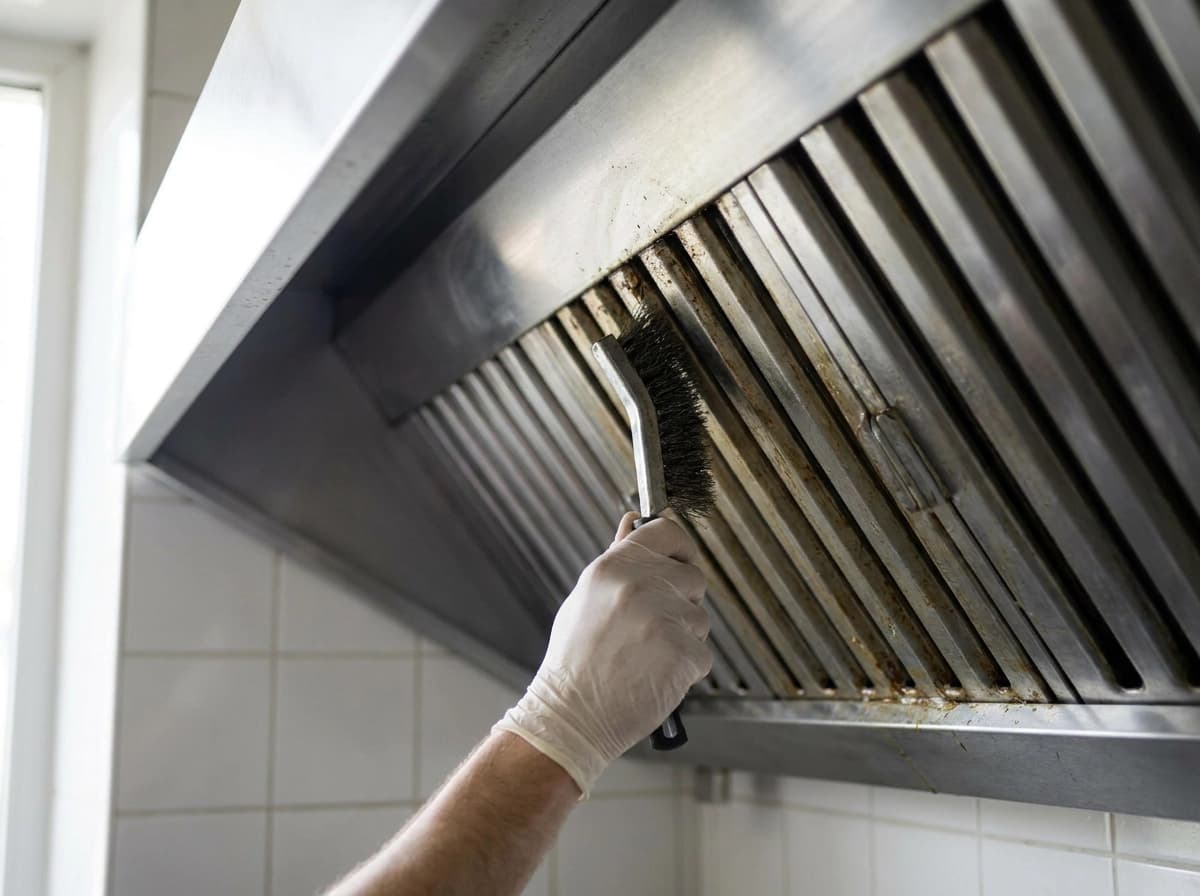
That dual-segment reality has a direct regulatory consequence, and it starts with one document.
NFPA 96, formally titled the Standard for Ventilation Control and Fire Protection of Commercial Cooking Operations, is the authoritative national standard governing commercial exhaust hood cleaning across Canada. Ontario references NFPA 96 as a compliance benchmark for commercial kitchen operations; operators in Brampton should confirm current enforcement requirements with Peel Region Fire and Emergency Services. When an inspector arrives at a Brampton kitchen, NFPA 96 is the measuring stick.
The standard's most consequential feature is its variable frequency framework. There is no single cleaning interval that applies universally. Instead, NFPA 96 ties required cleaning schedules to cooking equipment type and operational volume. NFPA 96 establishes a tiered framework; authoritative secondary sources summarising the standard indicate intervals generally as follows:
- Monthly: High-volume operations, solid-fuel equipment (including wood- and charcoal-fired tandoor ovens), and wok systems
- Quarterly: Moderate-volume cooking operations
- Semi-annual or annual: Low-volume or seasonal kitchens meeting defined thresholds
Operators should confirm the current edition's specific thresholds with their cleaning provider or the Ontario Fire Code authority having jurisdiction.
For Brampton's food-manufacturing and commissary operators, this framework carries significant weight. A facility running 12- to 16-hour production cycles does not qualify as moderate-volume by any reasonable reading of the standard. These kitchens almost universally fall into the monthly tier. Many operators underestimate this obligation when initially setting up service contracts.
Non-compliance carries real consequences. Kitchens found out of schedule may face enforcement orders, insurance complications, or potential closure depending on the jurisdiction and severity.
Cleaning certificates issued after each service visit are the primary compliance record. Operators must retain these documents and confirm they reflect the correct frequency for their specific equipment. For a practical overview of what to demand from any provider before signing a contract, this guide to commercial hood cleaning services for Ontario kitchen operators covers the documentation requirements in detail.
Hood Cleaning Requirements for Brampton Restaurants and Food Courts
The schedule tiers established above apply differently to restaurants depending on equipment type and daily cooking hours, and those distinctions drive the compliance decisions for most Brampton food court and quick-service operators.
Equipment type is often the deciding factor. A food court tenant running charbroilers or open-flame grills moves into a higher cleaning tier regardless of overall sales volume, because these appliances generate grease-laden vapour at rates that fryers alone do not. High-use fryer banks carry the same implication. Operators who assume moderate traffic keeps them on a semi-annual schedule should verify that assumption against their actual equipment list, not just their hours.
Scope of service is equally consequential. Professional hood cleaning for restaurant kitchens must cover the plenum, filters, exhaust fan, and the full ductwork run, not just the filter bank. Partial cleaning that stops at the accessible surfaces is a persistent deficiency in the industry; it leaves grease accumulation in the plenum and duct system where it poses the highest fire risk, and it will not satisfy a Peel Region fire inspection.
Scheduling is a practical constraint that restaurant and food court operators cannot ignore. Most locations have narrow service windows between closing and prep for the next shift. Kitchen hood cleaning services that work only during business hours force operators to choose between cleaning compliance and lost revenue. Power Hoods Systems has built overnight and off-hours scheduling into standard service delivery since 1993, serving Brampton restaurant and food court clients without treating after-hours availability as an upgrade.
Higher Stakes: Hood Cleaning for Food-Manufacturing Plants and Commissaries
Food-manufacturing facilities and commissary kitchens in Brampton's industrial corridors operate in a fundamentally different risk environment than the restaurant segment described above. Industrial exhaust systems involve longer duct runs, higher-capacity fans, and multiple hood assemblies across a single floor plan, and these facilities accumulate grease at significantly higher rates than a standard restaurant kitchen, a difference that drives the compliance calculus for virtually every commissary-scale operation toward NFPA 96's highest-frequency cleaning tier.
The physical infrastructure compounds the challenge. Commercial kitchen cleaning services at manufacturing scale require crew capacity, specialised equipment, and access planning that a provider sized for restaurant work simply cannot replicate on site.
Compliance exposure is also structurally different. A commissary supplying retail chains or catering networks is not just protecting its own operating licence. A grease fire or a failed inspection can trigger a facility shutdown that breaks downstream supply contracts and affects clients who have no direct relationship with the fire marshal. The stakes extend well beyond the kitchen walls.
Documentation expectations reflect that elevated risk. Cleaning records must meet applicable NFPA 96 minimums; a certificate that lacks proper frequency documentation, technician credentials, or system-scope notation can fail an audit even when the physical cleaning was completed correctly.
Power Hoods Systems' service history across 5,000-plus projects since 1993 includes large-scale commissary and manufacturing environments. This is not an adaptation from restaurant-focused work; it has been part of their operational scope from the beginning, which matters when a facility manager is evaluating whether a provider genuinely understands industrial kitchen exhaust demands.
Tandoor Ovens and Wok Systems: Why Specialized Cleaning Matters at Scale
Within Brampton's commissary and food-manufacturing sector, two equipment categories present compliance challenges that go beyond what standard commercial hood cleaning services handle: tandoor ovens and high-volume wok systems.
Tandoor ovens fired by wood or charcoal produce carbonized grease deposits and combustion particulate that bond differently to duct surfaces than liquefied grease from fryers or grills. Standard alkaline degreasers do not fully break down carbonized char; without the correct chemistry and mechanical technique, deposits remain embedded in duct walls even when visible surfaces look clean. Those residual deposits are a fire hazard regardless of appearance.
Wok systems at commissary scale compound the problem through sheer output. Intense, localized BTU loads aerosolize grease at rates that exceed virtually every other cooking equipment type, accelerating duct accumulation to levels that demand at least monthly cleaning, and potentially more frequent service depending on output.
Solid-fuel cooking equipment, including charcoal- and wood-fired tandoors, is generally understood to fall into the standard's highest-frequency cleaning tier, monthly at minimum, based on the volume and character of combustion residue produced. That classification follows from the chemistry of what these appliances generate, not merely from cooking hours or transaction volume.
Generalist hood cleaning companies lacking direct tandoor and wok experience routinely under-clean these installations. Power Hoods Systems is one of the few kitchen hood cleaning services in the GTA with documented, practised specialization in both equipment categories, a specific capability that carries real weight in Brampton's South Asian food-manufacturing and restaurant market. For context on what a full exhaust cleaning engagement covers in these systems, what commercial chimney cleaning services actually cover provides a useful reference point.
What to Look for When Evaluating Hood Cleaning Companies in Brampton
Choosing the right provider matters as much as choosing the right cleaning schedule. Use these six criteria as your evaluation framework.
Demand certification documentation. Any qualified hood cleaning company should carry NFPA 96-compliant certification and issue a properly formatted compliance certificate after every service visit. Verbal assurances carry no weight with a Peel Region fire inspector or an insurance adjuster. Ask for the paperwork before you sign a contract.
Match the provider to your kitchen segment. A company built around restaurant accounts may lack the crew size, equipment capacity, or scheduling infrastructure a multi-hood commissary requires. Before you engage anyone, ask specifically whether they have serviced facilities comparable to yours in scale and operational profile. For a deeper look at what a complete service engagement covers, see What Hood Cleaning Services Actually Include: The Ontario Operator's Guide.
Confirm full-system scope in writing. Compliant cleaning covers the hood, filters, plenum, ductwork to the rooftop exhaust fan, and the fan itself. Partial cleaning that stops at accessible surfaces is a common cost-cutting measure that leaves operators technically non-compliant and at elevated fire risk.
Verify off-hours and emergency availability. Commercial kitchen cleaning services that cannot accommodate overnight scheduling or respond to emergency grease situations are an operational liability, particularly for manufacturing facilities running continuous production cycles.
Require a verifiable project history. References from comparable kitchen environments carry more weight than general testimonials. A provider with 30-plus years of Ontario operation and more than 5,000 completed projects offers documented evidence that newer entrants simply cannot match.
Ask about crew consistency. Facilities with controlled access, security protocols, or complex equipment layouts benefit materially from assigned technicians who already know the site, rather than rotating crews learning the space on each visit.
Serving Both Sides of Brampton's Kitchen Sector
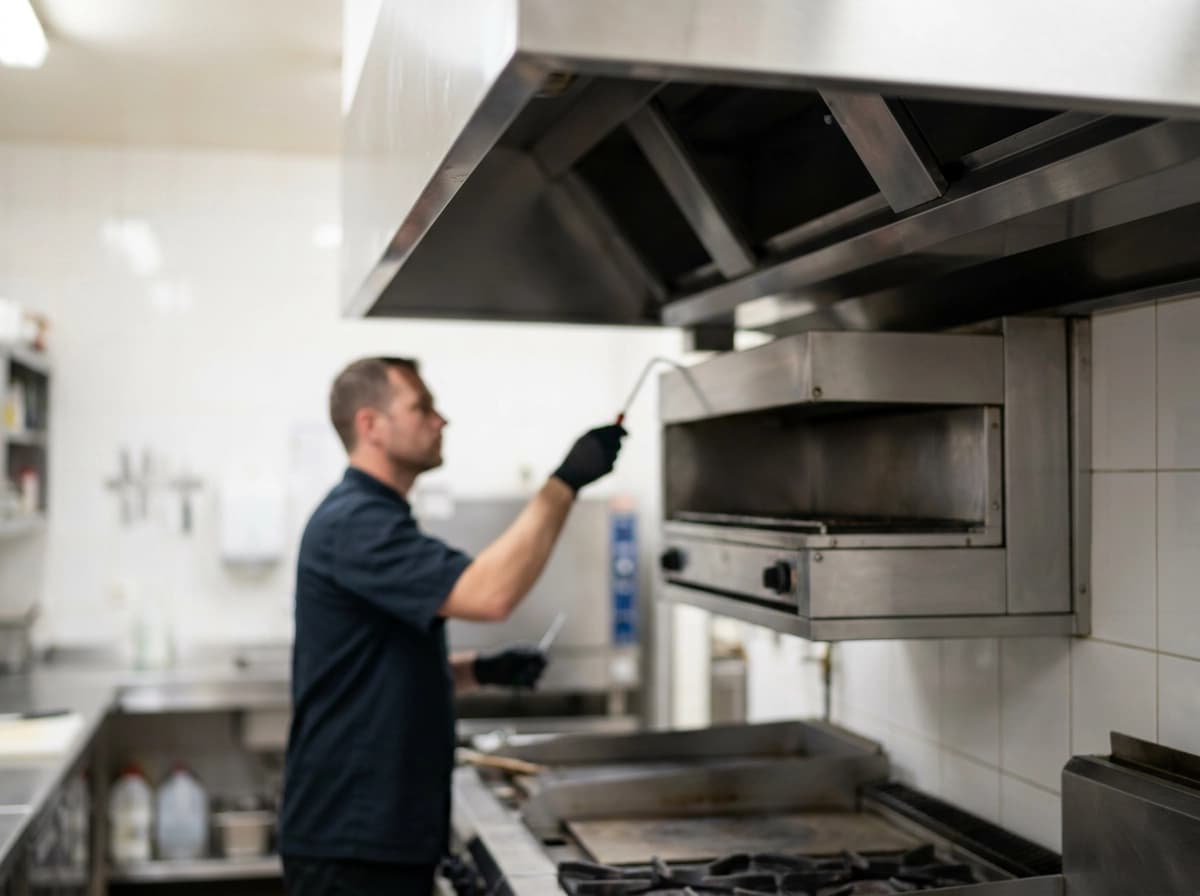
Power Hoods Systems serves Brampton's full kitchen spectrum: a single-hood food court tenant on Steeles Avenue and a multi-system commissary on Dixie Road are both within scope, handled by the same NFPA 96-certified team with 30-plus years of Ontario-based operation.
That certification matters beyond the certificate itself. Compliance documentation issued after every service visit is formatted to satisfy Peel Region fire inspectors, insurance carriers, and third-party food safety auditors simultaneously. Operators do not need to chase supplementary paperwork or explain gaps in their service records.
Scheduling is built around operational reality. The 24/7 availability and overnight service windows Power Hoods Systems provides are standard features, not upgrades. Food-manufacturing facilities running continuous production and restaurants that cannot absorb daytime downtime both receive the same access to off-hours scheduling without a premium attached.
Brampton's South Asian food-manufacturing and restaurant sector also receives purpose-matched service, with cleaning chemistry and technique matched to tandoor and wok exhaust systems rather than generic degreasing protocols. For context on how this specialization compares across the broader Ontario market, the comparison of restaurant hood cleaning companies in Ontario examines NFPA 96 credentials and service scope in detail.
Operators across Brampton, Mississauga, Toronto, and Hamilton can contact Power Hoods Systems at any hour for service scheduling, compliance questions, or emergency response.
Key Takeaways for Brampton Kitchen Operators
The picture that emerges across this page is consistent: Brampton's kitchen sector divides into two structurally different compliance environments, and treating them as interchangeable carries real regulatory and operational risk.
Here is what every Brampton kitchen operator should carry forward:
- Two segments, two compliance profiles. Restaurants and food courts face different NFPA 96 obligations than commissaries and food-manufacturing facilities. A commercial kitchen cleaning service that serves one segment well is not automatically qualified for the other.
- Monthly schedules apply to solid-fuel and high-volume continuous-production operations, confirm your tier with your provider. Regulators reference NFPA 96 as the compliance benchmark; operating outside the applicable schedule exposes operators to enforcement action and insurance risk.
- Specialized equipment such as tandoors and wok systems requires matched chemistry and technique, not generic degreasing. Providers without direct experience in these installations create fire risk even when visible surfaces appear clean.
- Select on capability, not price. When evaluating kitchen hood cleaning services, prioritize NFPA 96 certification, full-system scope, documented project history, and off-hours availability. Low quotes that reflect partial cleaning leave operators non-compliant.
If you are uncertain which cleaning frequency applies to your specific kitchen type, or whether your current provider's scope meets the full NFPA 96 system requirement, contact Power Hoods Systems directly. With 30-plus years of Ontario experience across both restaurant and manufacturing environments, they can confirm the correct schedule and arrange service that fits your operation.
FAQS
What is NFPA 96 and why does it matter for my Brampton kitchen?
NFPA 96, the Standard for Ventilation Control and Fire Protection of Commercial Cooking Operations, is the authoritative national standard governing commercial exhaust hood cleaning across Canada. Ontario references NFPA 96 as the compliance benchmark, and Peel Region fire inspectors use it as the measuring stick when they visit Brampton kitchens. Non-compliance can result in enforcement orders, insurance complications, or potential facility closure. Understanding and meeting NFPA 96 requirements is essential for regulatory compliance and fire safety.
How often should my commercial kitchen hood be cleaned?
NFPA 96 establishes a tiered framework based on equipment type and operational volume. Most high-volume operations, solid-fuel equipment (like tandoor ovens), and wok systems require monthly cleaning. Moderate-volume cooking operations typically require quarterly cleaning. Low-volume or seasonal kitchens may qualify for semi-annual or annual cleaning. The key is that there is no universal interval—your specific cleaning frequency depends on your equipment and cooking volume. Always confirm the correct tier with your cleaning provider or Peel Region Fire and Emergency Services.
Why do Brampton's food-manufacturing facilities have different cleaning requirements than restaurants?
Brampton has a unique split market: traditional restaurants and food courts along Steeles Avenue versus large-scale food-manufacturing plants and commissary operations in industrial zones near Dixie Road. Manufacturing facilities operate 12–16 hour production cycles, accumulate grease at significantly higher rates, have longer duct runs, higher-capacity fans, and multiple hood assemblies. These factors almost universally place commissaries and food-manufacturing operations into NFPA 96's highest-frequency cleaning tier (monthly), which is different from many moderate-volume restaurants. Treating both segments with identical service approaches leaves one dangerously under-serviced.
What should a complete hood cleaning service include?
A fully compliant NFPA 96 hood cleaning must cover the hood, filters, plenum, entire ductwork run to the rooftop exhaust fan, and the fan itself. Partial cleaning that stops at accessible surfaces is a common industry deficiency that leaves grease accumulation in the plenum and duct system—where it poses the highest fire risk—and will not satisfy a Peel Region fire inspection. When evaluating providers, confirm in writing that their scope includes the full system, not just the filter bank. This is not an optional upgrade; it is a regulatory requirement.
Why do tandoor ovens and wok systems require specialized cleaning?
Tandoor ovens fired by wood or charcoal produce carbonized grease deposits and combustion particulate that bond differently to duct surfaces than liquefied grease from fryers. Standard alkaline degreasers cannot fully break down carbonized char, leaving residual deposits embedded in duct walls even when surfaces look clean—a genuine fire hazard. Wok systems at commissary scale aerosolize grease at rates exceeding most other cooking equipment, requiring at least monthly cleaning. Generalist hood cleaning companies lacking direct tandoor and wok experience routinely under-clean these installations. Specialized chemistry and mechanical technique matched to these appliances are essential for true compliance.