
You've decided on downtown Toronto for dinner. Now comes the part that actually trips people up: choosing where to go. Search for the best restaurants downtown Toronto and you'll get dozens of ranked lists, each one confidently placing different spots at the top. None of them answer the question you're actually asking, which is "where should I go tonight, for this specific situation?"
That's exactly what this guide is built to fix.
Instead of handing you another numbered list to scroll through, we've organised everything by occasion. Whether you're closing a business deal, planning a date night, grabbing a solo lunch, or booking somewhere big enough for a group celebration, you'll find a clear, practical recommendation waiting for you. We'll also cover the best affordable options, the most visually impressive spots, a quick neighbourhood breakdown, and tips for actually securing a reservation when you want one.
Downtown Toronto has more than 80 recognised restaurants across every price point and cuisine. The question was never what's good. It's what's right for your night. Let's figure that out together.
Why Occasion Beats Rankings When Choosing Where to Eat Downtown
Downtown Toronto has a quality problem nobody talks about: there is too much of it. The MICHELIN Guide Canada recognizes 86+ restaurants across the downtown core, including 14 one-star establishments, 23 Bib Gourmand picks, and 49 selected restaurants. Finding somewhere good is not the challenge. Finding somewhere right for your specific evening is where most diners get stuck.
Ranked lists make this harder, not easier. When a guide hands you a "Top 30," you still have to cross-reference cuisine, price, atmosphere, and neighbourhood on your own before you can book anything. That is four separate filters applied in sequence. Occasion-first organization collapses all four into one: tell the guide what you are doing tonight, and the relevant cuisine, price tier, and neighbourhood come pre-sorted.
The price distribution across downtown makes this approach genuinely useful at every spend level. MICHELIN-recognized spots cover the full range: 5 budget ($), 29 moderate ($$), 25 special occasion ($$$), and 27 premium ($$$$) restaurants. Every occasion has real options regardless of what you want to spend.
MICHELIN Canada has already arrived at this conclusion. The guide explicitly flags 14 restaurants for date night, 6 for groups, and 8 for family dining. For a deeper look at the starred tier specifically, the complete 2025 guide to Toronto's Michelin-starred restaurants breaks down every one-star kitchen and what sets each apart. Destination Toronto's "Celebration-Worthy Restaurants" marketing category points in the same direction: real diners search by occasion, not by rank.
This guide is built around that reality.
How to Use This Guide: Occasions, Neighbourhoods, and Price at a Glance
Here is how every entry in this guide is structured, so you can move straight from reading to booking.
Each occasion section gives you 3 to 5 picks in a consistent format: restaurant name, downtown neighbourhood (Financial District, King West, Entertainment District, and others), price tier, and a single clear reason the pick fits that occasion specifically. No filler.
Neighbourhood tags are wayfinding, not trivia. When a pick is noted as five minutes from the PATH or walkable to TPAC, that detail tells you whether the restaurant fits your evening's logistics before you even look at the menu.
Price tiers follow MICHELIN convention throughout:
- $ (budget)
- $$ (moderate)
- $$$ (special occasion)
- $$$$ (premium)
Dietary needs are flagged where they genuinely matter for the occasion. Downtown Toronto's dining ecosystem is notably inclusive, with strong coverage across vegetarian, gluten-free, and vegan options. That coverage is noted in sections where dietary range is a real decision factor, such as solo lunch or affordable dining, and skipped where it is not. Dietary coverage across all occasions is strong, see the relevant occasion section for when it matters most. For operators curious about what drives kitchen-level consistency behind these numbers, Downtown Toronto Restaurants: What Operators Must Know in 2026 is worth a read.
This guide is built to be scanned. Jump directly to the occasion heading that matches your need, read the picks, and book. Starting at page one is optional.
The Power Dinner: Best Restaurants for a Business Meal That Delivers
A business dinner has a different job than a social one. The food has to be good, but the meal also has to work: conversation stays audible, wine gets handled professionally, and nobody spends ten minutes parsing an unfamiliar menu while a client waits.
Most ranked lists skip those criteria entirely. Here is what actually matters for a power dinner, and where the Financial District and King West corridors deliver it.
What to look for before you book:
- Private or semi-private seating. A dedicated room or a well-placed booth keeps the conversation contained and signals to your guest that you planned ahead.
- Controlled acoustics. Hard surfaces and open-concept layouts are atmosphere killers for business meals. Ask directly when you call.
- Late seatings. Weeknight availability at 8:30 or 9 PM is a genuine differentiator for client dinners that follow an afternoon meeting. Not every premium spot holds those slots, so confirm before committing.
- Service pacing. A skilled floor team reads a business table differently, moving courses without rushing. This is worth asking about, or checking recent reviews for.
- A legible menu. Steakhouses and contemporary cuisine restaurants (the two most reliable formats downtown) keep ordering intuitive, so the meal stays on the client, not the kitchen.
Budget it correctly. At the $$$ and $$$$ tiers, budget for a significant per-person spend; confirm current pricing directly with the venue.
The Financial District is the practical anchor for after-work client dinners, especially with PATH access. King West adds atmosphere without sacrificing polish, which can itself become a talking point. For kitchen-forward venues with similar standards outside the downtown core, Niagara's Kitchen Guardians covers comparable options further along the lake.
Date Night Done Right: Cool Restaurants in Downtown Toronto Worth Booking
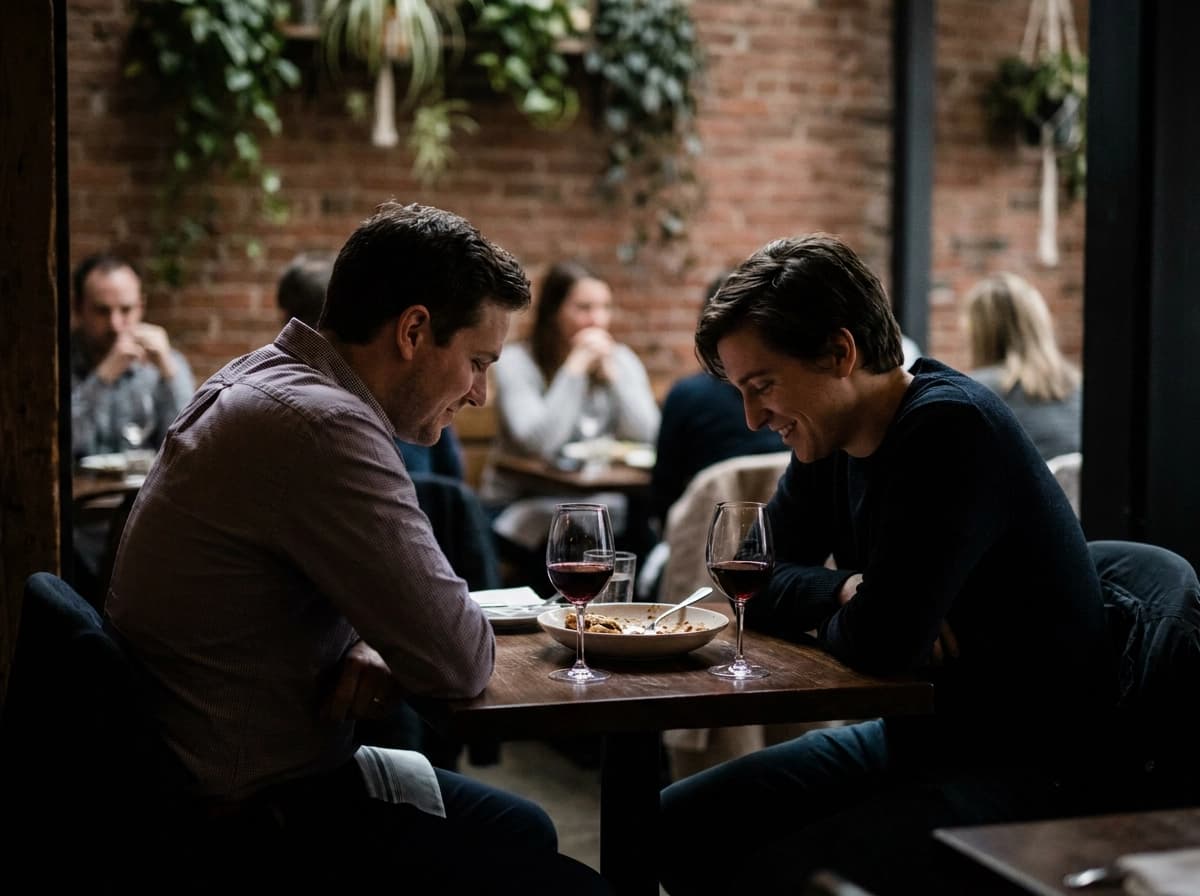
If the power dinner is about control, date night is about atmosphere. The two occasions share some geography but almost nothing else in what makes them work.
The MICHELIN Guide Canada flags 14 downtown Toronto restaurants specifically for date night, the largest occasion-specific category in the entire guide, more than family dining (8), groups (6), or chef's table experiences (2). That concentration is a useful signal: this is where the most restaurants have invested in the things that make an evening feel special.
What Actually Differentiates a Date-Night Restaurant
Cuisine matters less than you might think. Lighting, table spacing, noise floor, and interior design do most of the heavy lifting. A room that feels intimate at 50% capacity can feel loud and chaotic at full booking. The best date-night picks in downtown Toronto tend to cluster in King West and the Entertainment District, where renovated heritage buildings, independent chef-driven kitchens, and serious bar programs give you a full evening arc, not just a meal.
Contemporary cuisine (20 restaurants in the ecosystem) and French (8 restaurants) dominate the date-night pool. Japanese omakase formats add something different: counter seating, a set progression, and natural conversation built around the chef's rhythm. It is structured intimacy without the formality of a tasting menu.
Price Does Not Predict Romance
The 23 Bib Gourmand picks include genuinely cool spaces that do not require a special-occasion budget.
Booking tip: Popular date-night venues fill quickly; booking at least several weeks ahead is advisable, particularly on weekends.
The Solo Lunch: Best Affordable Restaurants for Eating Well on Your Own
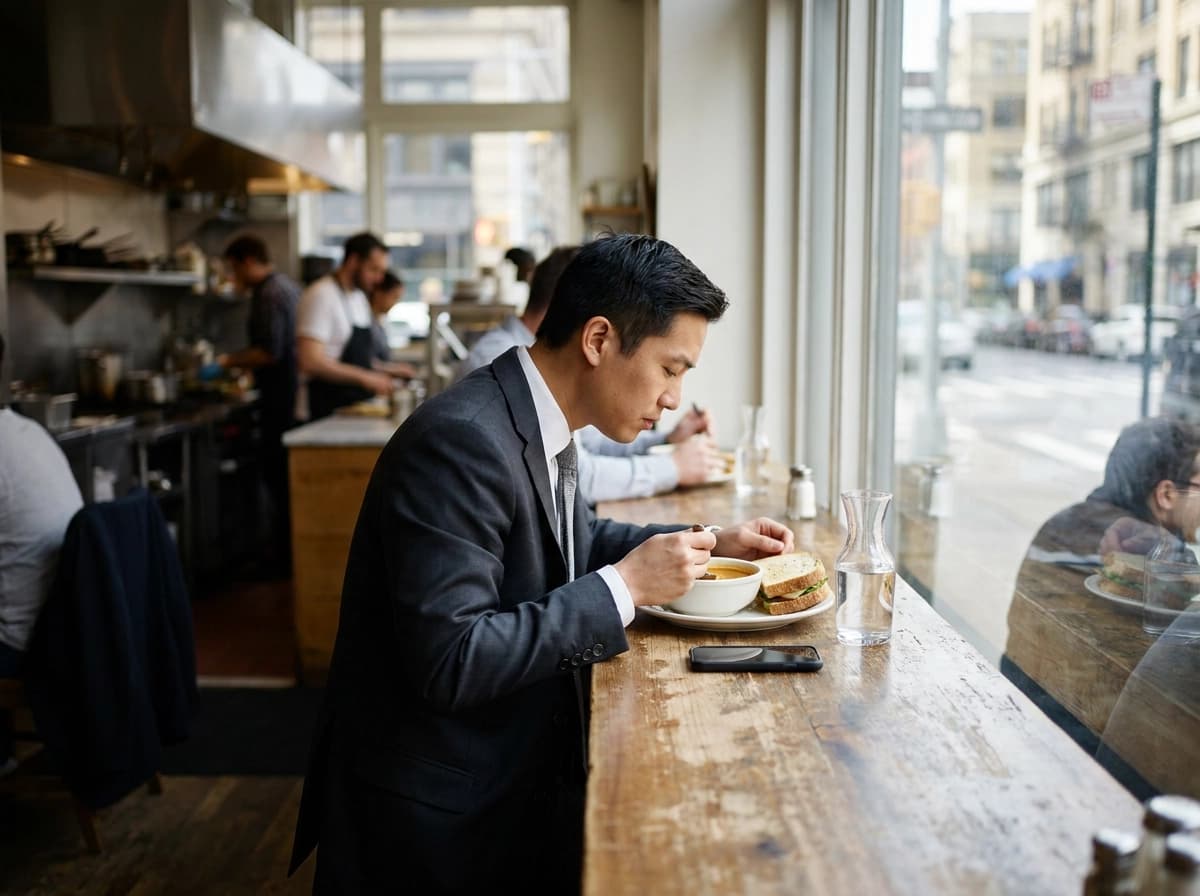
Solo lunch is the dining occasion most downtown Toronto guides ignore. MICHELIN's Toronto listings flag only 2 restaurants specifically for solo dining, yet the Financial District fills thousands of seats every weekday between noon and 1:30 PM.
Why Counter Seating Changes Everything
Counter seating (covered in the date-night section's format notes) matters even more for solo efficiency, most turn a table in under an hour. That pace matters when you have 45 to 60 minutes and a 1 PM meeting.
Where the Value Is
The $$ Bib Gourmand tier is the solo lunch sweet spot. All 23 of these MICHELIN-validated restaurants meet a "good quality, good value" standard, so you are not gambling on an unknown kitchen to save money.
Three cuisine categories dominate this tier for solo diners: Indian restaurants, Japanese ramen and sushi counters, and Thai spots, all of which run efficient service formats well-suited to a weekday lunch window.
Picking Your Neighbourhood
For weather-independent lunches, PATH-connected spots in the Financial District are the practical choice. Stay underground, eat well, and be back at your desk on time. King Street and Queen Street West suit a slower solo lunch when your schedule allows; the atmosphere is better and the crowd is less harried.
With 64 restaurants offering vegetarian options and 45 vegan options across the downtown ecosystem, dietary needs are well served without requiring a premium budget. If you are a restaurant operator curious about what solo lunch volume does to a kitchen's exhaust systems, the Common Questions from Toronto Restaurant Owners page covers that context.
Group Celebrations: Best Downtown Toronto Restaurants for Birthdays and Special Occasions
Scaling up from a solo lunch to a table of 8 or 12 changes nearly every variable. Quality is still easy to find downtown; logistics are not.
MICHELIN flags 6 downtown Toronto restaurants specifically for groups, but that list is a starting point, not a ceiling. The real criteria are broader: shareable menus or family-style formats, private or semi-private event space, and a noise floor low enough that your table can actually hear each other past the second round of drinks. All three matter equally.
Destination Toronto actively markets a celebration-focused dining category to visitors and event planners, which tells you something useful: the restaurants competing for that visibility are set up for events. They are more likely to offer dedicated event coordination, set menus, and deposit-based reservations than a spot that simply tolerates large parties.
Before you book, ask about minimums. Parties of 6 or more at premium venues frequently trigger a minimum spend or a mandatory prix-fixe format. Many $$$ tier picks handle this through a group menu that simplifies ordering and keeps the kitchen on pace. Confirming this upfront saves an awkward conversation at the table.
For cuisine format, contemporary and Italian restaurants adapt best to groups. There are 9 Italian spots in the downtown ecosystem, and the family-style, shareable-plate model that defines them removes the ordering friction that bogs down large tables.
Noise is a practical dealbreaker, not a preference. Open-concept rooms with concrete floors and high ceilings look great in photos but turn a table of 10 into a shouting match. Prioritise spots with acoustic panelling, a private room option, or both.
Booking well in advance, typically a month or more for larger parties, is strongly advisable; confirm the lead time directly with each venue when you enquire about group arrangements.
Best Affordable Restaurants Downtown Toronto: Great Meals Without the Price Tag
Not every great meal in downtown Toronto requires a group booking or a celebration budget. Shifting from the group occasion to the everyday question of value, this is where the downtown dining ecosystem genuinely rewards knowing where to look.
The MICHELIN Bib Gourmand list is the fastest filter here, all 23 picks meet a "good quality, good value" standard.
The honest truth about budget dining downtown: only 5 restaurants in the entire downtown ecosystem sit in the true budget ($) tier. High rents and labour costs make sub-$30-per-person dining genuinely rare in the core. The real sweet spot is the $$ tier, which has 29 restaurants and is where most of the Bib Gourmand picks land. That is the range to focus on.
Neighbourhood matters more than most guides admit. Affordable dinner restaurants cluster around Queen Street West, Kensington-adjacent streets, and the edges of the Entertainment District. The Financial District tends to run higher because lunch trade from office workers props up pricing all day.
Certain cuisines consistently punch above their price point at the $$ tier. Indian restaurants, Thai spots, and Japanese ramen and izakaya formats all run high-volume kitchens where operational efficiency shows up directly on the plate. These are not cheap by accident; they are built to deliver at scale.
With 64 vegetarian-friendly and 56 gluten-free restaurants across the ecosystem, dietary needs are broadly accommodated.
A $$ restaurant with one drink typically falls well within a moderate weeknight budget; check current menus directly for pricing.
Atmosphere-First Picks: The Most Visually Striking and Memorable Downtown Spots
Price matters less than you might think when it comes to atmosphere. Some of the most visually striking spaces in downtown Toronto sit in MICHELIN's selected tier rather than its starred tier, because a stunning room and an exceptional kitchen are separate investments that do not always land in the same building. If your priority is a meal you will actually remember, atmosphere deserves its own filter.
Atmosphere categories worth knowing before you book:
- Heritage conversions: King West and the Entertainment District have the highest concentration of former banks, factories, and warehouses repurposed as dining rooms. The bones of these spaces, exposed brick, high ceilings, original structural steel, do most of the design work.
- Rooftop and patio-forward venues: Seasonal but significant. Summer bookings at rooftop spots fill faster than almost any other format in the downtown core.
- Chef's counter and open kitchen theatre: MICHELIN flags exactly 2 downtown Toronto restaurants for chef's table experiences. These are the highest-intensity picks, where the kitchen itself is the setting. Reserve well in advance.
- Moody, intimate rooms: Smaller independent spots, often in the $$ to $$$ range, built for low-light late-evening dining rather than daytime traffic.
The Entertainment District and King West concentrate the most design-forward spaces. The Financial District tends toward polish and formality, impressive but rarely theatrical.
One trade-off worth flagging: the most visually dramatic rooms in downtown Toronto are almost always the loudest. Hard surfaces that photograph beautifully, stone, glass, bare brick, scatter sound. If conversation matters for your occasion, confirm noise level before booking. If energy and buzz are the point, those same rooms deliver exactly that.
Social media visibility also affects booking urgency in a practical way. Restaurants with strong visual identities hold reservation demand longer than quality-alone peers. A visually distinctive spot may be harder to book six months from now than it is today, even if the reviews stay flat.
Downtown Toronto Dining by Neighbourhood: A Quick Orientation
Knowing which restaurant fits your occasion matters, but knowing which neighbourhood to look in gets you there faster. Downtown Toronto divides into five distinct dining zones, and each one has a different personality.
Financial District
This is the business meal corridor. PATH connectivity means you can reach lunch without a coat in January, and the concentration of $$$ and $$$$ restaurants reflects a clientele on expense accounts. Service formats here tend to be polished and paced for deal-making, not lingering.
King West and King Street East
This is where the creative, independent restaurant energy lives. The King corridor contains a notable concentration of MICHELIN-recognized restaurants across multiple price tiers, from $$ Bib Gourmand finds to $$$$ tasting menus. If date night or atmosphere-first dining is your occasion, start your search here.
Entertainment District
The organizing logic here is the show schedule. Restaurants in this pocket are built around pre-theatre seatings and post-show crowds, which means earlier service, group-friendly formats, and late-night kitchens that stay open longer than most other downtown areas. It is the strongest neighbourhood for group celebrations with flexible timing.
Queen Street West
The most relaxed and independent-friendly stretch downtown. Affordable solo lunches and low-key weeknight dinners are where this neighbourhood excels. The concentration of $$ Bib Gourmand picks is higher here than in the Financial District, and the general vibe rewards a slower, more casual pace.
Harbourfront and Waterfront
Seasonal patio dining dominates. For a summer group booking with out-of-town guests who want a view, this works well. For occasion-specific dining any other time of year, the other four neighbourhoods serve you better.
The mismatch risk is real: a power dinner booked in Queen West often lands in a room with the wrong energy and service register, just as a casual affordable pick in the Financial District can feel oddly stiff. Matching neighbourhood to occasion is the shortcut the other guides skip.
Practical Booking Tips to Actually Secure the Table You Want
Once you know your neighbourhood, the next step is actually securing the seat. Here is what works in downtown Toronto right now.
Use the right platform, but verify directly. Resy and OpenTable handle the majority of downtown Toronto reservations. That said, high-demand omakase and chef's counter spots often release seats on a rolling 30-day window or operate waitlist-only systems that never appear on either platform. Always check the restaurant's own website before assuming a platform shows full availability.
Book earlier than feels necessary. Top restaurants fill quickly, especially on weekends; enquire directly about typical lead times when you call, as practices vary significantly by venue.
Read the cancellation policy at booking, not after. Many premium Toronto restaurants now operate credit-card-hold policies with no-show fees; read the cancellation terms at booking time.
Communicate dietary needs at reservation. With 64 vegetarian-friendly, 56 gluten-free, and 45 vegan-friendly restaurants across the downtown ecosystem, kitchens are generally well-equipped to accommodate. The catch is that modifications require prep time; mentioning your needs at the door puts the kitchen in a difficult position.
No reservation? Target bar seats and counters. Bar seating and counter spots absorb same-day diners who cannot get onto a platform. The solo lunch and affordable dining tiers are the most walk-in-friendly categories in this guide.
What Goes on Behind the Pass: Kitchen Standards and Why They Matter
Once you have your reservation locked in, it is worth knowing a little about what happens on the other side of that kitchen door.
The food on your plate is only as consistent as the kitchen producing it. Exhaust system maintenance, grease management, and fire code compliance, including NFPA 96 standards, are operational baselines that directly affect food safety, air quality, and whether a kitchen stays open. A restaurant that lets maintenance slide tends to let other standards slip too.
This matters more for certain kitchen formats than others. Indian restaurants in the downtown ecosystem, several of which operate tandoor ovens, and the many wok-based Asian kitchens operate at heat loads that standard exhaust schedules are not designed to handle. Tandoor fires burn extremely hot and continuously; wok cooking generates concentrated grease-laden vapour at high volume. Both demand more frequent, more specialized hood cleaning than a conventional line kitchen, or the grease buildup becomes a genuine fire risk.
Toronto's commercial kitchen regulations require compliant hood and exhaust systems, and the restaurants that take those requirements seriously tend to apply the same discipline across sourcing, storage, and service. Operational rigour is not usually compartmentalized.
For restaurant operators reading this: Power Hoods Systems has been servicing commercial kitchens across Ontario since 1993, with 5,000+ completed projects including high-volume tandoor and wok systems throughout the downtown Toronto corridor. NFPA 96 certified, with 24/7 emergency availability and overnight scheduling that keeps your kitchen running without disrupting service.
In a downtown market where reputation and reservation demand are tightly linked, kitchen health is not just a compliance exercise. It is a competitive one.
Your Next Reservation Starts Here
The guide you have just read is built around one principle: know your occasion before you open a booking app. Start with the scenario, and cuisine, price tier, and neighbourhood fall into place automatically. Start with any of those other filters first, and you are cross-referencing four variables at once before you have even picked a restaurant.
A few reminders worth keeping close:
- Power dinners and date nights require careful advance planning. Confirm acoustic setup and seating format when you book, not when you arrive.
- Group celebrations of eight or more benefit from early outreach about set menus and deposits; at top picks, this step is non-negotiable.
- Affordable dining in the downtown core is genuinely strong. The Bib Gourmand tier covers 23 MICHELIN-validated restaurants where good value and good cooking coexist. You do not have to leave the core or lower your standards to find an excellent meal without a special-occasion budget.
- The ecosystem here is deep. With 86-plus MICHELIN-acknowledged establishments spanning every price tier and occasion format, downtown Toronto is among Canada's most extensively MICHELIN-recognized dining destinations. The only move that does not serve you is defaulting to a generic ranked list and hoping something fits.
Lead times and cancellation terms vary by occasion tier, revisit the relevant occasion section before you book.
Bookmark this guide and return to it when the next occasion comes around. The occasions in your life stay consistent; the restaurant landscape shifts seasonally. When a pick changes, the section that matched you to it will still do its job.
Conclusion
Downtown Toronto does not ask you to compromise. With over 86 MICHELIN-acknowledged restaurants spanning every budget, neighbourhood, and occasion type, the right table exists for every moment in your calendar. Occasion first, everything else second, that single principle turns a paralysing list of options into a straightforward decision. Choose your scenario, return to the relevant section, and make the reservation.
FAQS
Why should I organize my restaurant search by occasion instead of using ranked lists?
Ranked lists require you to manually cross-reference four separate filters—cuisine, price, atmosphere, and neighbourhood—before you can book. Organizing by occasion collapses all four into one: tell the guide what you're doing tonight, and the relevant details come pre-sorted. This saves time and helps you find a restaurant that's actually right for your specific evening, not just one that's ranked highly in general.
How many MICHELIN-recognized restaurants are in downtown Toronto, and what price ranges do they cover?
Downtown Toronto has 86+ MICHELIN-recognized restaurants across the downtown core, including 14 one-star establishments, 23 Bib Gourmand picks, and 49 selected restaurants. The price distribution includes 5 budget ($), 29 moderate ($$), 25 special occasion ($$$), and 27 premium ($$$$) restaurants, ensuring real options are available at every spend level for any occasion.
What should I look for when booking a power dinner or business meal?
For a successful business meal, prioritize: private or semi-private seating to keep conversation contained, controlled acoustics (avoid hard surfaces and open-concept layouts), late-night availability (8:30 or 9 PM slots), skilled service pacing that reads the table professionally, and legible menus that keep focus on your guest. The Financial District and King West corridors are ideal, with the Financial District offering PATH access for convenience.
How far in advance should I book a restaurant for different occasions?
Booking timelines vary by occasion and demand. For date night and popular venues, book several weeks ahead, especially for weekends. For group celebrations of 6 or more, book a month or more in advance and confirm lead times directly with the venue. High-demand omakase and chef's counter spots operate on rolling 30-day windows. Always check the restaurant's website directly, as availability on platforms like Resy and OpenTable may not reflect full options.
What's the best way to find affordable but high-quality dining in downtown Toronto?
Focus on the $$ moderate tier, which has 29 restaurants and includes most of the 23 MICHELIN Bib Gourmand picks that meet 'good quality, good value' standards. Indian, Thai, and Japanese ramen and izakaya restaurants consistently punch above their price point due to operational efficiency. Queen Street West and the edges of the Entertainment District have higher concentrations of affordable options. With 64 vegetarian-friendly and 56 gluten-free restaurants available, dietary needs are well-served without requiring a premium budget.